If looks like we never learn anything from collective experience.
As soon as the celebrations of the centenary began, there were new hostilities in Europe. And indeed, the Ukraine-Russia war didn't begin in 2022, but as soon as 2014.
In reality, apart from the most horrible world war 2 (or great patriotic war, for some), which looked like a second (and final ?) act of a tragedy, Europe had actually known a civil war (but aren't all wars civil in a way ?) in the Balkans, during the 90's.
At that time, I was merely a kid / teen, and all of that seemed far and unreal. Yet, in the 2010s I met someone, Alexander, who talked to me about his personal experience of the bombing over Belgrade (here is an opinionated about it)- here is an opinionated post about it -So, after all, it was not only news headlines, but people, of flesh and tears...
While writing these lines, I also remember the face of another man, quite older and from Croatia, in the area of Dubrovnik. Shaking sadly his head, he was talking about the war and told me the sweet time when all communities lived together in the ex Yugoslavia (which means, by the way : Slavs from the south)…
To go even farther - and because I personally don't think that an European life (French, German, English, Serb, Croatian, Russian, Ukrainian…) is worth more than any other life in the world (Yemenite, Iraqi, Korean, Vietnamese, American, Israelian, Palestinian…), let's remember also how many wars there have been all along the XXth and our XXIst century.
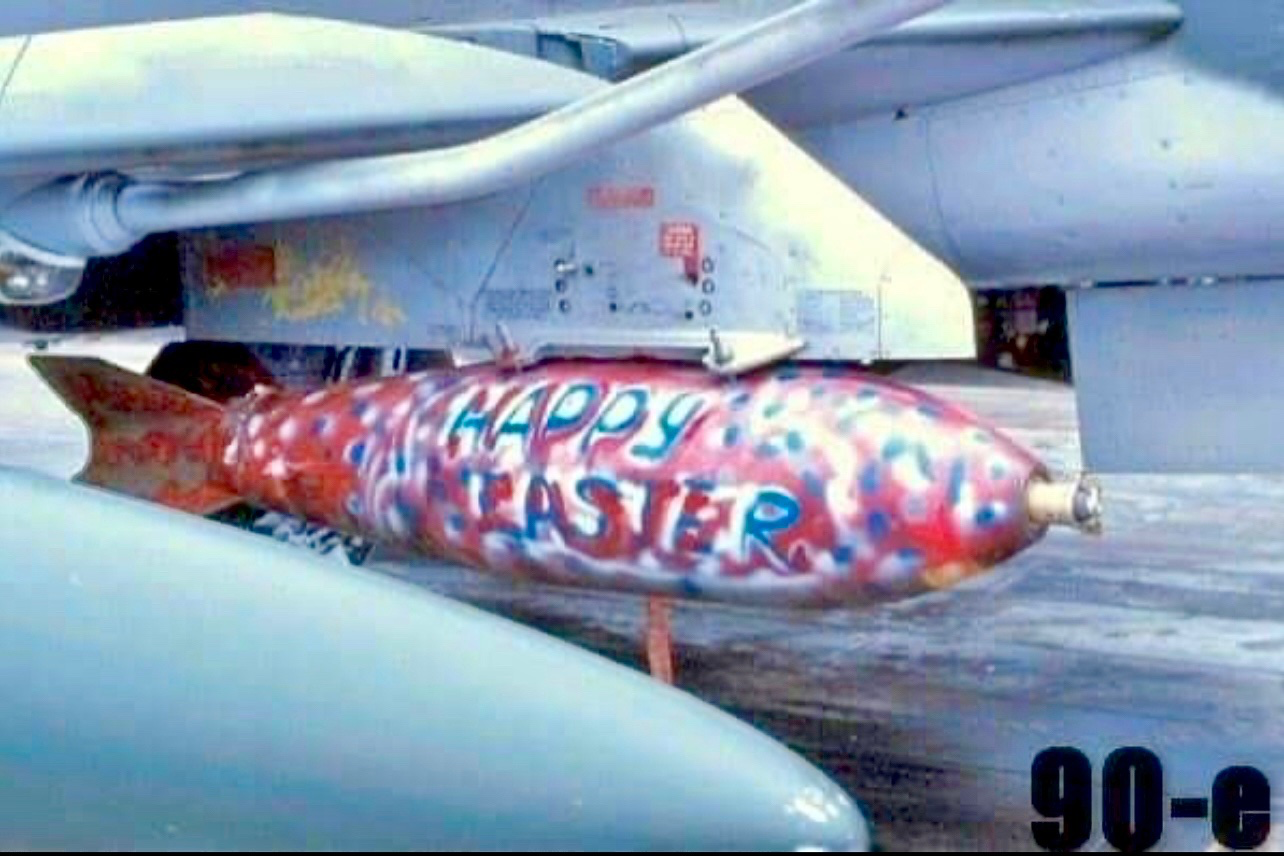
And let's remember also how the "western democracies" were always involved. Our world talks a lot about its attachment to Peace, but it makes and sells arms for the whole world. And, strangely enough, arms and bombs do kill ; that's what they were made for in the first place, right ?
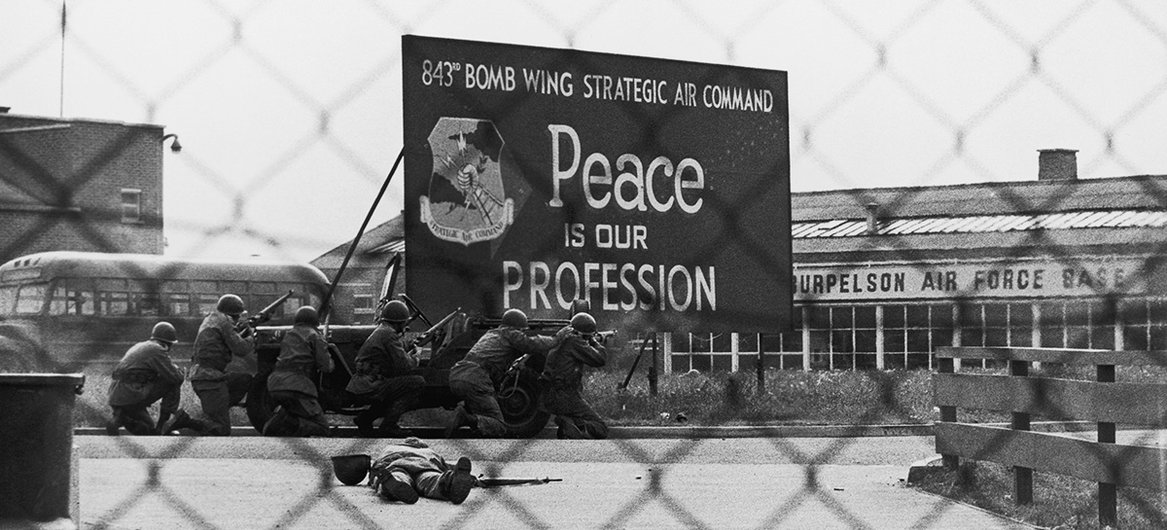
Still from S. Kubrick movie : "Dr Strangelove, or how I learned to love the bomb"
Eisenhower himself was talking about the dangers of the military industrial complex, who became uncontrollable and for which the peoples' representatives seem to be directly working :
If you want the whole thing :
- Audio : from 06'26 to 09'00 - https://www.eisenhowerlibrary.gov/sites/default/files/all-about-ike/speeches/wav-files/farewell-address.mp3
- Written text : https://www.eisenhowerlibrary.gov/sites/default/files/research/online-documents/farewell-address/reading-copy.pdf
In 2014, I was actually working on a scenic adaptation of Erich Maria Remarque's novel : All Quiet on the Western Front.
In this context, the news of the war in the Ukraine struck me like a nightmare (let's remember about flight MH117, this civilian plane shot down on the 17th of July, 2014). It sure added to the importance of the theatrical work, yet all of it seemed so absurd !
I've met a few Ukrainians during my brief stays in Saint Petersburg. I've befriended others at my spouse orthodox church community in Marseille. In this group were Serbs, Russians, Ukrainians, Bulgarians, etc. and I can tell you that the expression "brother nations" was not only a stylistic term - that was just true.
But then, I've also witnessed in the very same group, very strong debates between some Russians and Ukrainians, at the time of Maidan. After this, old friends departed from one another. Happily some remained calm and reasonable whatever the news…
If I write all of this today, it's because this dramatic situation is at the origin of a new song, humbly dedicated to the people, who are placed in these dreadful hardships and events.
The text actually refers to France and Germany, which makes it apparently closer to World War One and participates to make it more accessible or even "politically correct" at first stance.
But, it could also go deeper and farther, with questions that are more actual, closer to us, and therefore more sensitive too…
Indeed, those two countries (among others) and some warlords and warmongers (like our good old Charlemagne the conqueror, covered by glory and blood) have a direct responsibility in a number of conflicts, notably the one occurring in the Ukraine. After all, France and Germany were supposed to be "guardians" of the Minsk agreements, right ?…
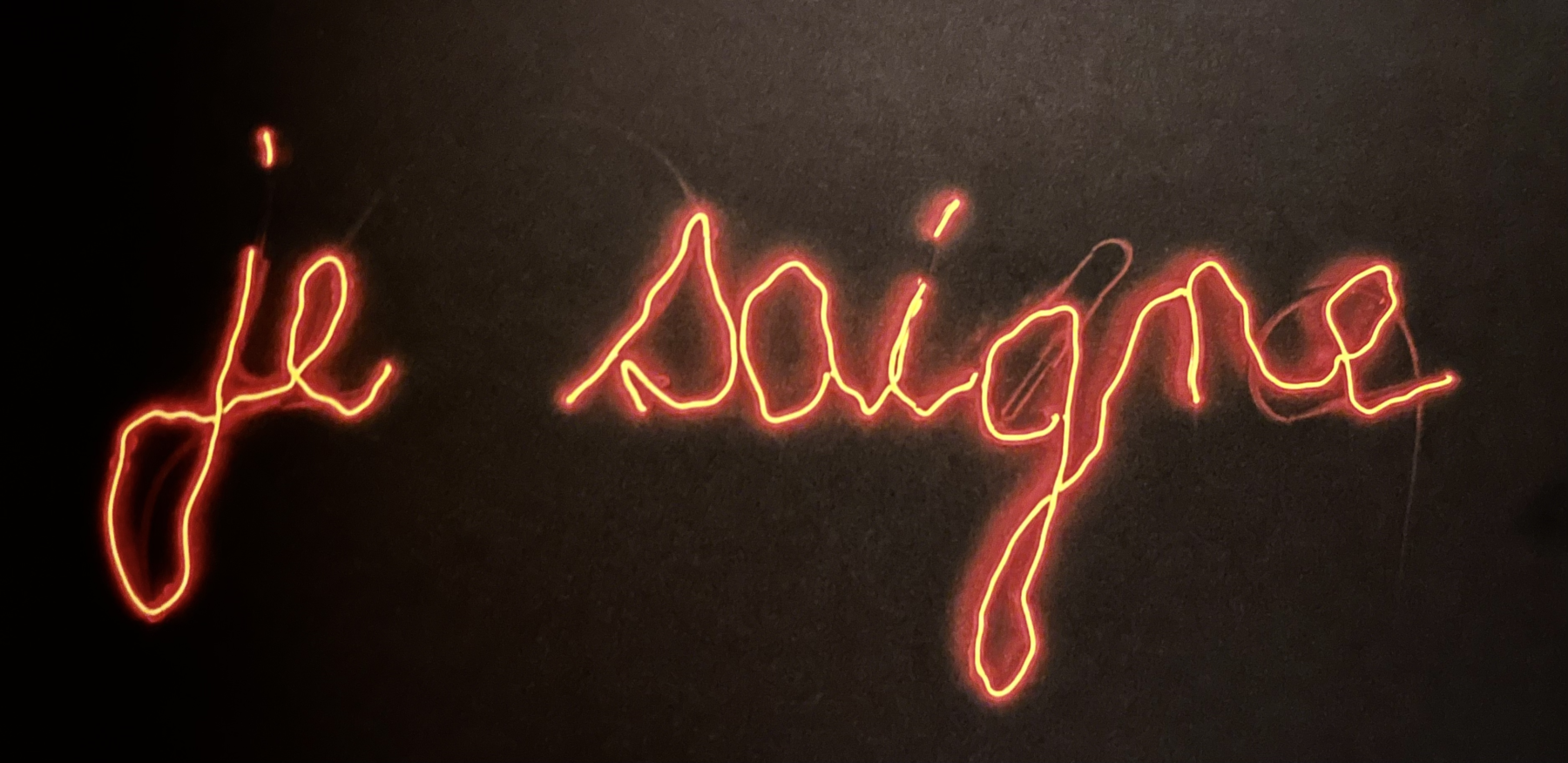
"Je saigne" (I bleed) - Claude Lévêque, 2014
If I can obviously understand how the "real politik" attitude tends to compromise oneself (and one country along), and that lies is a political norm (to the point to be able to talk openly about it in the press afterwards), let's keep in mind that, in the end, the people pay for it.
Neither F. Hollande, nor A. Merkel, Putin, Poroshenko or any so-called people's representative will suffer personally from any conflict.
What has happened to the "Kaiser" Wilhelm II after the defeat in 1918 ? Well, he sure lost his crown, but he didn't became short of tea… He was neve wounded nor harmed ; he recovered a good amount of money, some of his castles and he died at 82, in the Netherlands.
What about those French or British generals from ww1, who forced personally hundreds of thousands of men to their death ?
What about the peoples' representatives in the parliaments ? You know, contrary to the wars before, the soldiers of ww1 were citizens, to whom there should have been held accounts… The political responsibility was particularly clear, considering what everyone knew : this war was supposed to be short, because the arms were so powerful that it would soon turn, otherwise, into a bloodbath… Yet, it went on and on…
Now, let's look at the other side, at the people, just like you and I :
- 1914-1918 : about 9 millions deaths. At the time, those were mostly men, which means quite a few orphans along…
- 21 millions wounded - I spare you from the photos of the "broken faces", but do you imagine what it could be, to live on with this for the rest of your life ? How many catatonic states (there's a very moving documentary, about the shelled shocked) ? And what about the families, who had to endure this too, at the side of veterans.
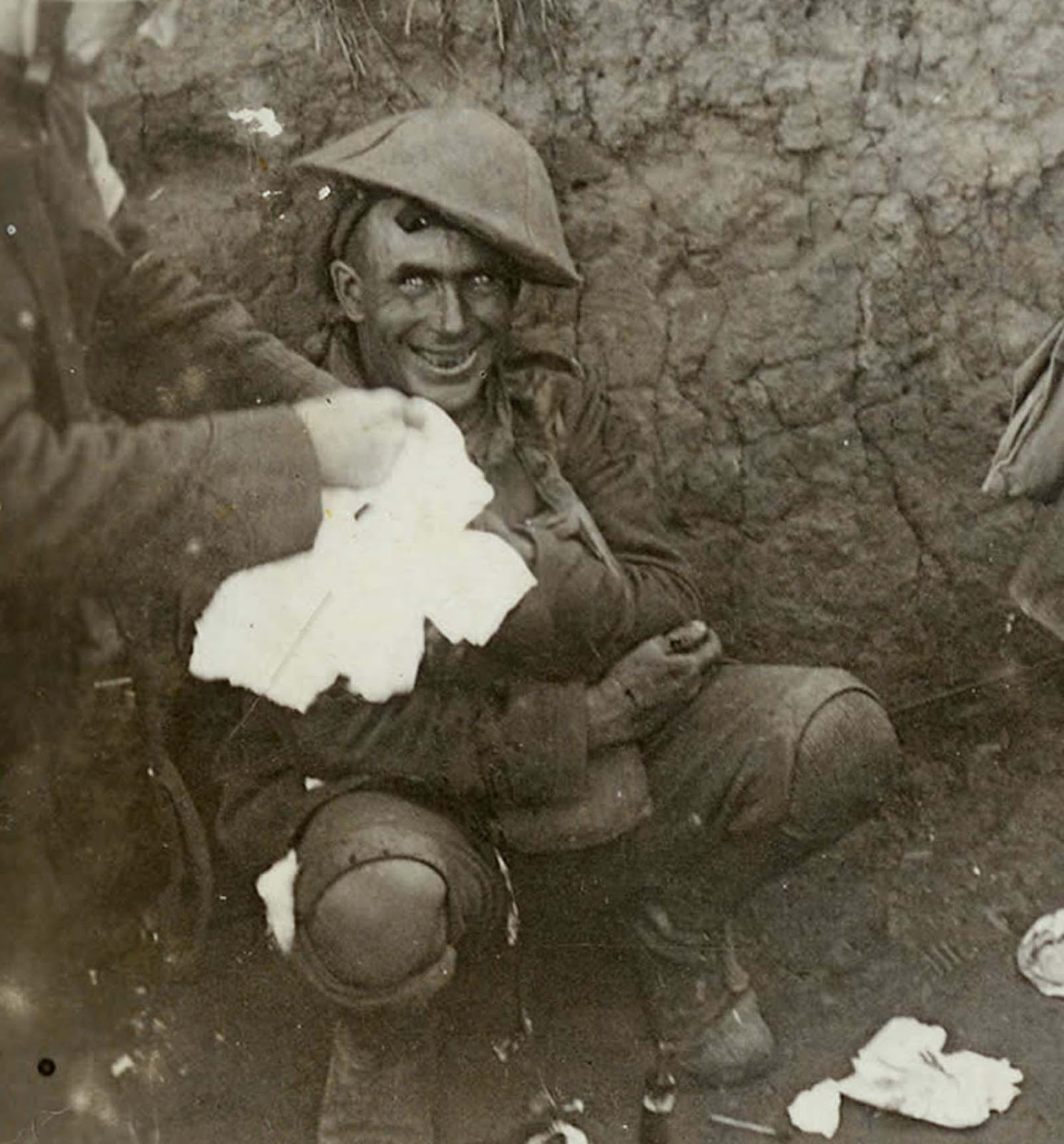
In the present war, Russian as well as Ukrainians casualties are taboo and state secrets. But everything tends to indicate that the number of deaths are actually comparable pro-rata temporis , to those from ww1.
Nothing seems to have changed, really.
Of course, as stated by Arthur Koestler in his book " Darkness at Noon", this is not so much a question of math. Those numbers do serve only one goal : to express the magnitude of the disaster.
At the end, what really counts is the Human person.
That is why I do understand those persons (and that might possibly chock some of you), who run away from drafting, AWOL.
We have seen a good number of such young men in the bus that brought us back to Europe (my wife, daughter and I, from a visit we made in Feb 2022 to my in laws). We came from St Petersburg towards Finland - and it is to be noted that these Ukrainian were crossing borders, passing through Russia ; doesn't it show that there is almost nothing personal there, but rather politics ? We also met a few masculine refugees here in Marseille.
To be open about it, I must confess that I fear the worst for my brother in law, who happens to work as a surgeon in Russia, in his 40s, no kid - an easy draft, really.
To do one's duty, is it to become cannon fodder ?
The text of this song is inspired by a poem, called " The sleeper in the valley ", by Arthur Rimbaud
In the poem, the young man seems to be sleeping ; only he has two red spots on his right side… Here is an English translation : https://www.babelmatrix.org/works/fr/Rimbaud,_Arthur-1854/Le_Dormeur_du_Val/en/4617-The_Sleeper_in_the_Valley#:~:text=TheSleeperintheValley(English)
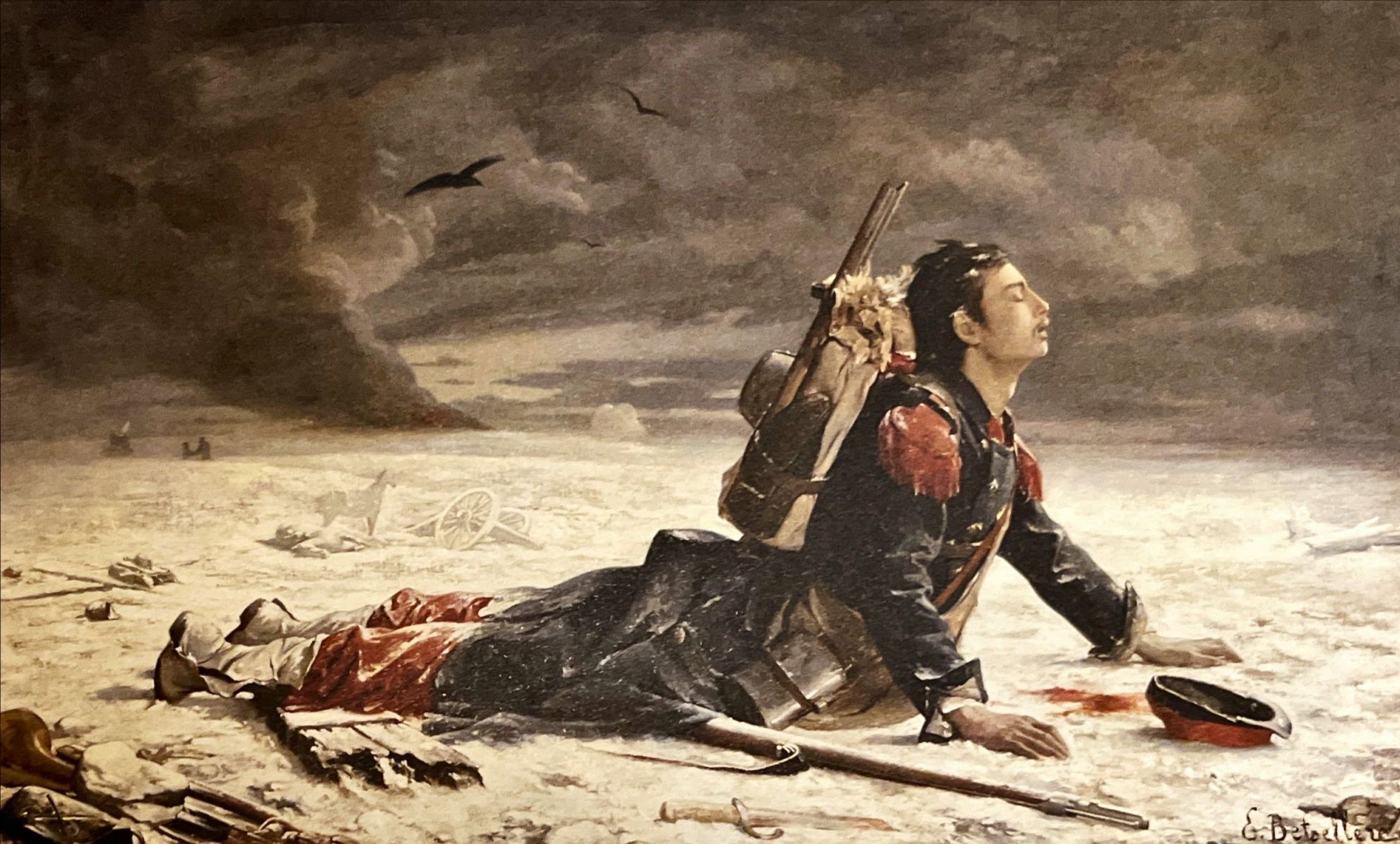
L'oublié ! (The forgotten one) - Emile Betsellère, 1872
In the song, the man is not "asleep" - yet. Quite the contrary, he lives on and on, suffers, and asks for a little bit of water. But no one can give him a hand anymore. He stays, all alone, by himself, in a no man's land filled with dead bodies and the whistling from the falling bombs (I humbly "stole" Jimmy Hendrix's idea of the guitar sounds "bomb machine", in his star spangled banner : Jimi Hendrix - The Star Spangled Banner [ National Anthem ] ( Live at Woodstock 1969 )
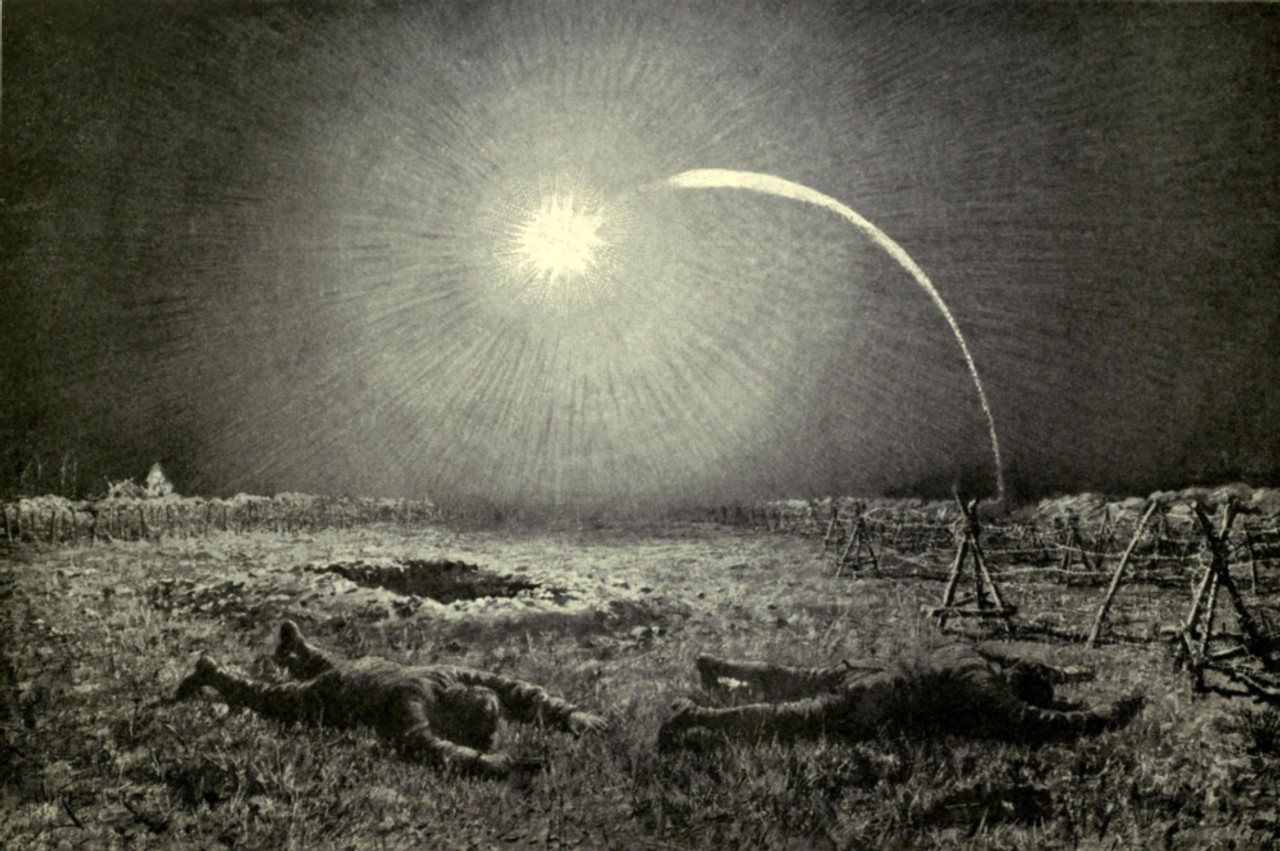
Words alternate between calls for help (first verse), revolt (chorus) and the time to get back to oneself and prepare for the great passage…
It seemed to me that the thing to do was to give my voice to this soldier, as an indirect yet personal way to address this human tragedy. Inspired by Jacques Brel, who would embody his characters, this "I" is personified in a quite physical way, almost theatrical. The voice is breathless, at times, dry or grave.
The chorus might be synthetized in those words : "Plague on both your houses" (says Mercutio, dying, in Shakespeare's Romeo and Juliet, Act III, Scene 1).
Yes, this is a political song, in the vein of " Petits Pas" - yet I don't do politics, at least in the classic sense.
I don't take sides : for me, aberration and nonsense are in both sides, together with crimes against mankind ! And that doesn't only concern the obvious stakeholders, but also their backers. They are represented and personified by warmongers politicians, who push for more guns, canons, bombs and therefore more deaths…
And what about us, who sometimes tend to believe their discourses ? Aren't we somewhat involved ?
Aren't we too, after all, (ir)responsible ?
 English
  Français
2 responses to “One war to end all wars”
Voir aussi le making of de cette chanson : https://volkanartz.w23.fr/making-of-der-des-ders/
[…] sous les projets), mais suite à la publication de la semaine dernière, au sujet de la chanson Der des Ders, il m’a semblé important de publier une traduction en anglais des […]