Lorsque j’ai appris que Peter Brook montait, aux côtés de son associée Marie-Hélène Estienne, une nouvelle version de la Tempête de Shakespeare, une évidence s’est imposée : avec ses 95 ans, à l’époque, ce serait fort probablement son dernier travail. Malheureusement, la tyrannie du temps et des statistiques a donné raison à cette intuition, puisque 2 ans plus tard, il s’éteignait…
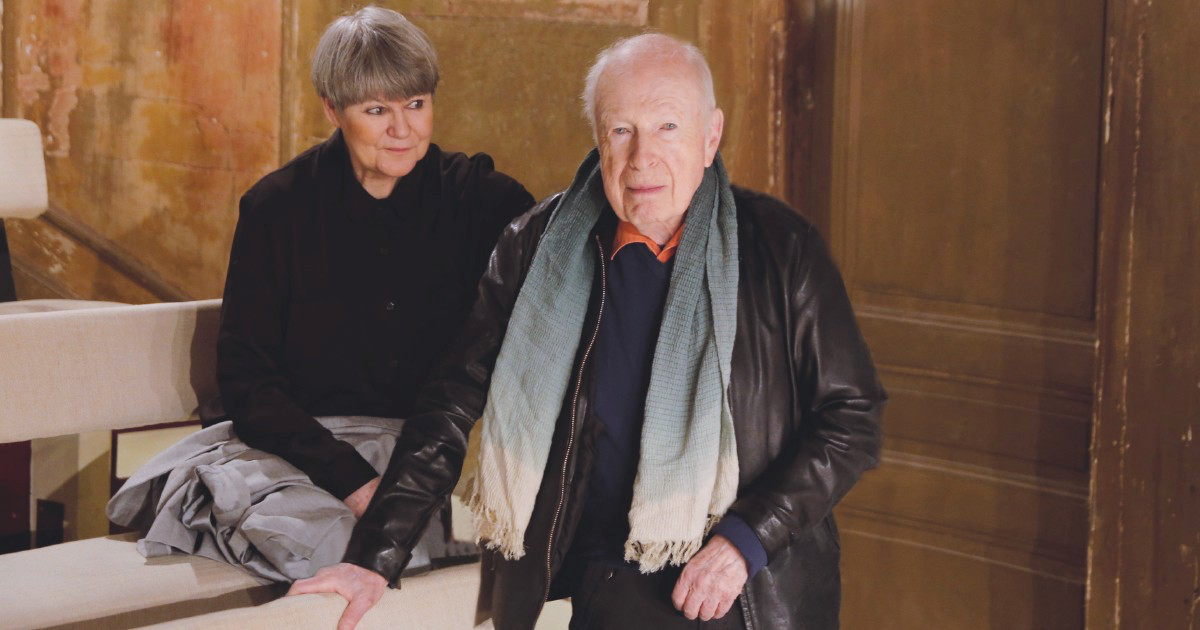
A l’époque, n’habitant pas Paris, je n’avais pas été en mesure de découvrir ce spectacle moi-même, bien que j’ai pu recommander à mes connaissances locales de s’y risquer. Les impressions récoltées montraient alors une certaine fragilité de ce travail, mais c’est la nature de l’art vivant…
Toujours est-il que cette création a beaucoup tourné depuis, avec plus de cent représentations (ce qui est assez exceptionnel aujourd’hui, pour du théâtre d’art, y compris pour les projets quasi “institutionnels”) et qu’elle a été reprise à Paris, en ce début d’année.
Cette fois-ci, j’y étais et c’était bien, très bien, même…
Peter brook : another kind of a legend
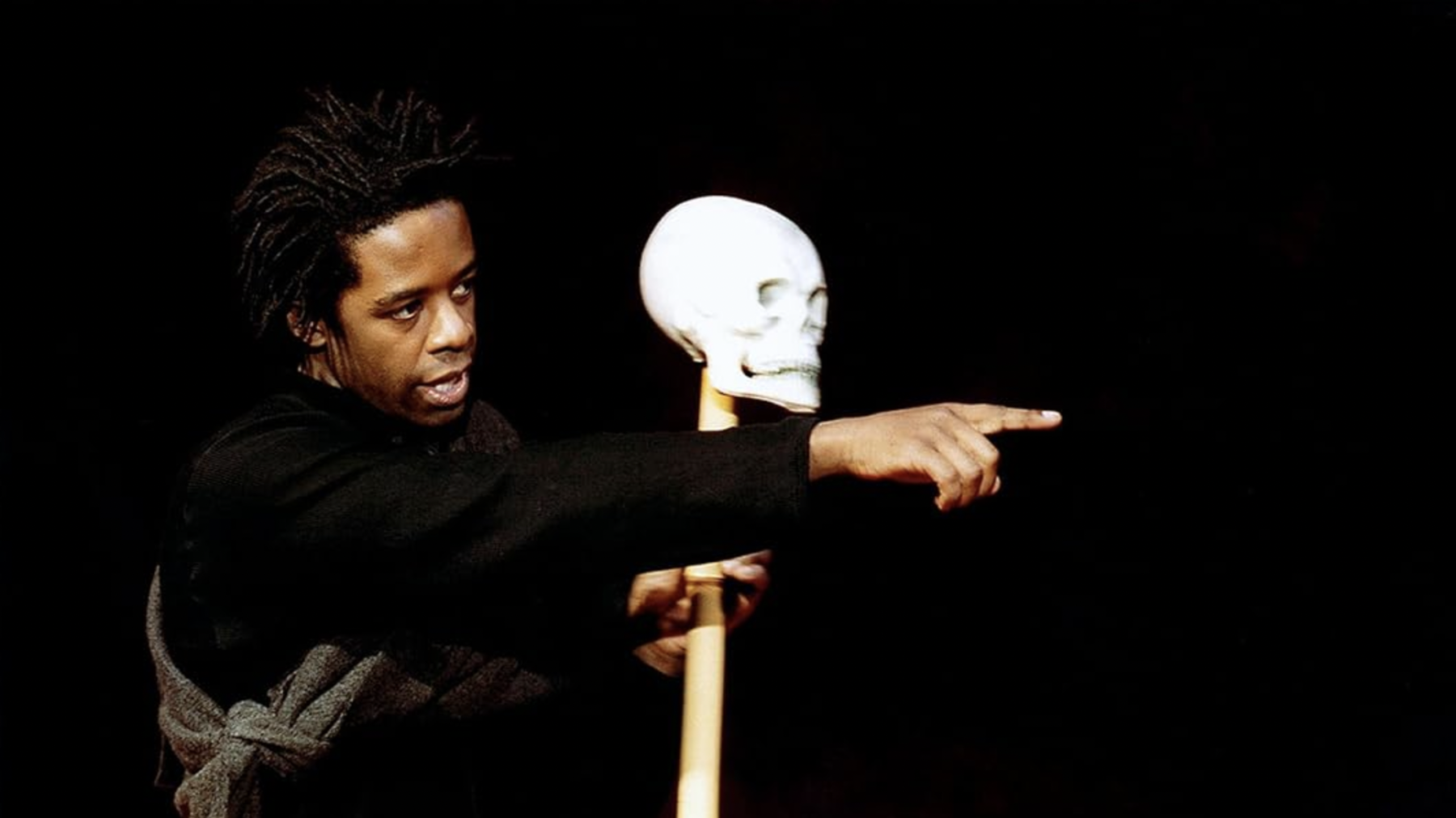
Comme beaucoup d’amoureux du théâtre, l’une de mes révélations artistiques est justement associée à cet homme et son travail, avec tout d’abord Hamlet, une création fabuleuse. J’avais eu la chance d’assister à sa version française, où le rôle titre était interprété par William Nadylam (alors que la version initiale et le film associé comptait sur Adrian Lester), aux côtés de Natasha Parry, Bruce Myers, Sotigui Kouyaté et bien d’autres…
Ensuite, j’ai pu apprécier bien d’autres travaux, dont son film “ovni” : “Sa majesté des mouches”, dans lequel des enfants sont évacués durant la seconde guerre mondiale et se retrouvent échoués sur une île. Ils forment alors une petite société improvisée de Robinsons Crusoë en herbe, ce qui n’ira pas sans tragédie.

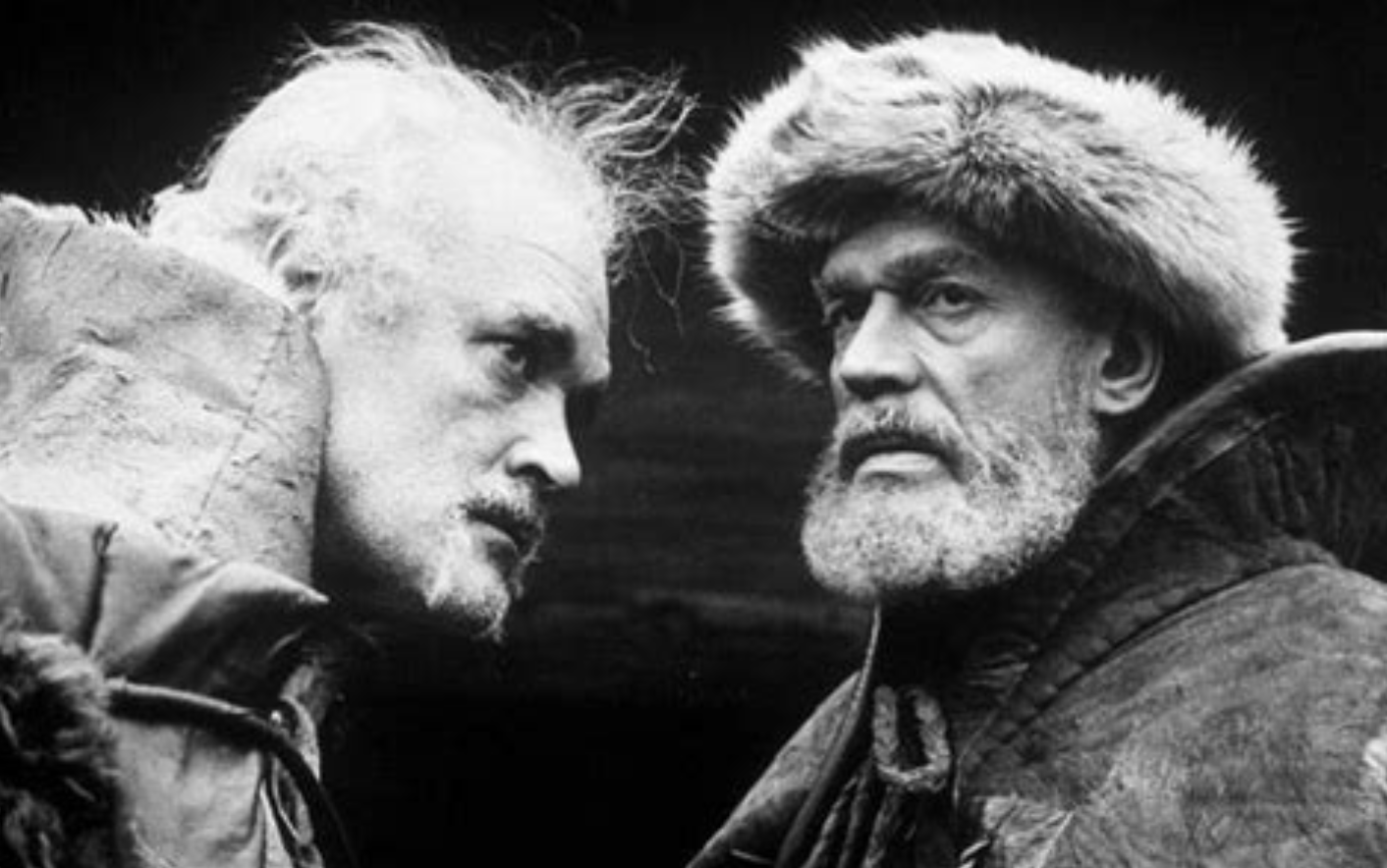
His movie version of King Lear, with Paul Scofield, was also worth the try, with this beastly, smelly atmosphere…
Pour l’écrire de manière synthétique : cet immense metteur en scène a réinventé un théâtre plus simple, organique et vivant. A titre personnel, il a constitué une référence énorme… à tel point même qu’après avoir lu et relu à peu près tous ses ouvrages, il m’a fallu m’en éloigner pour un certain temps.
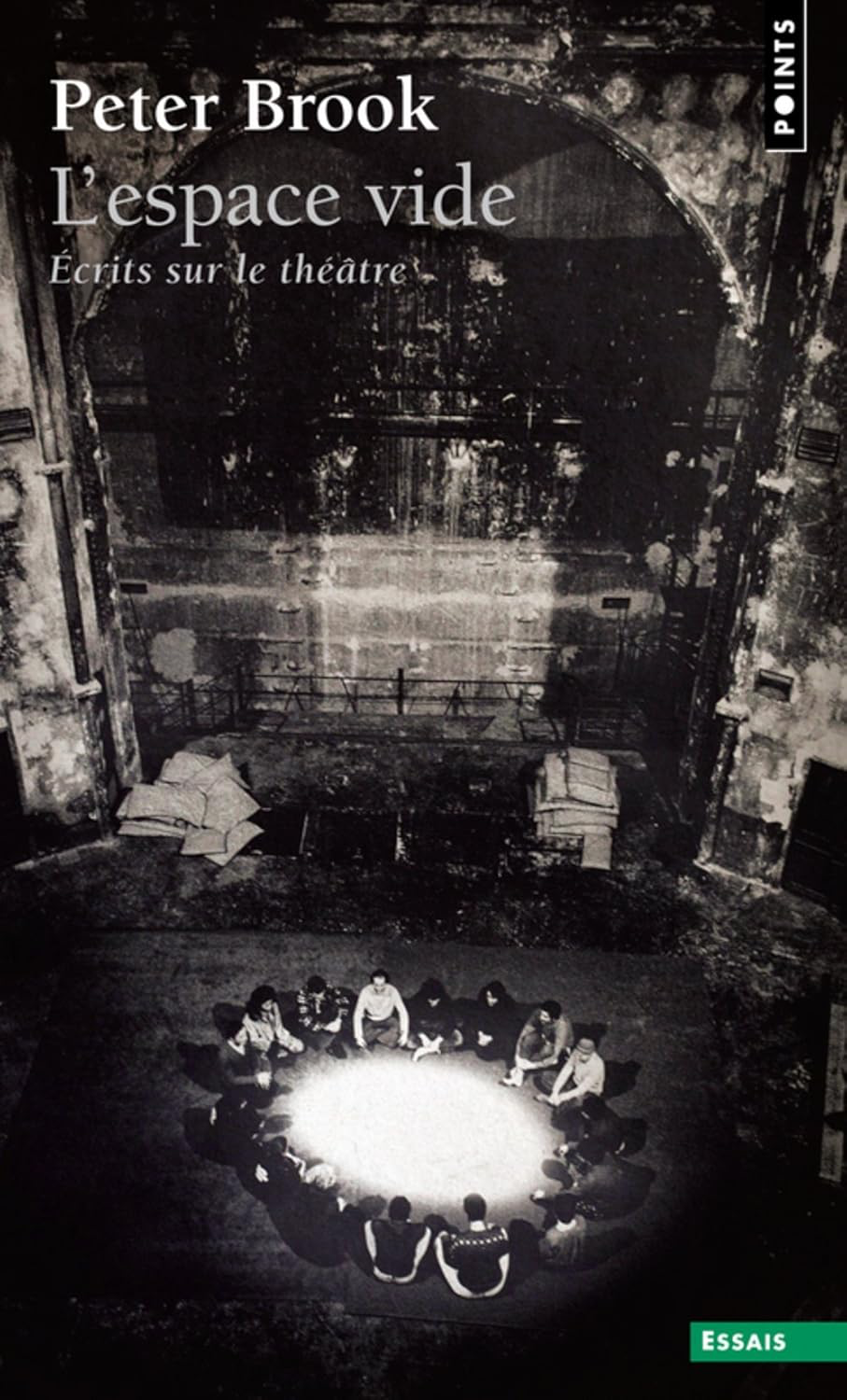
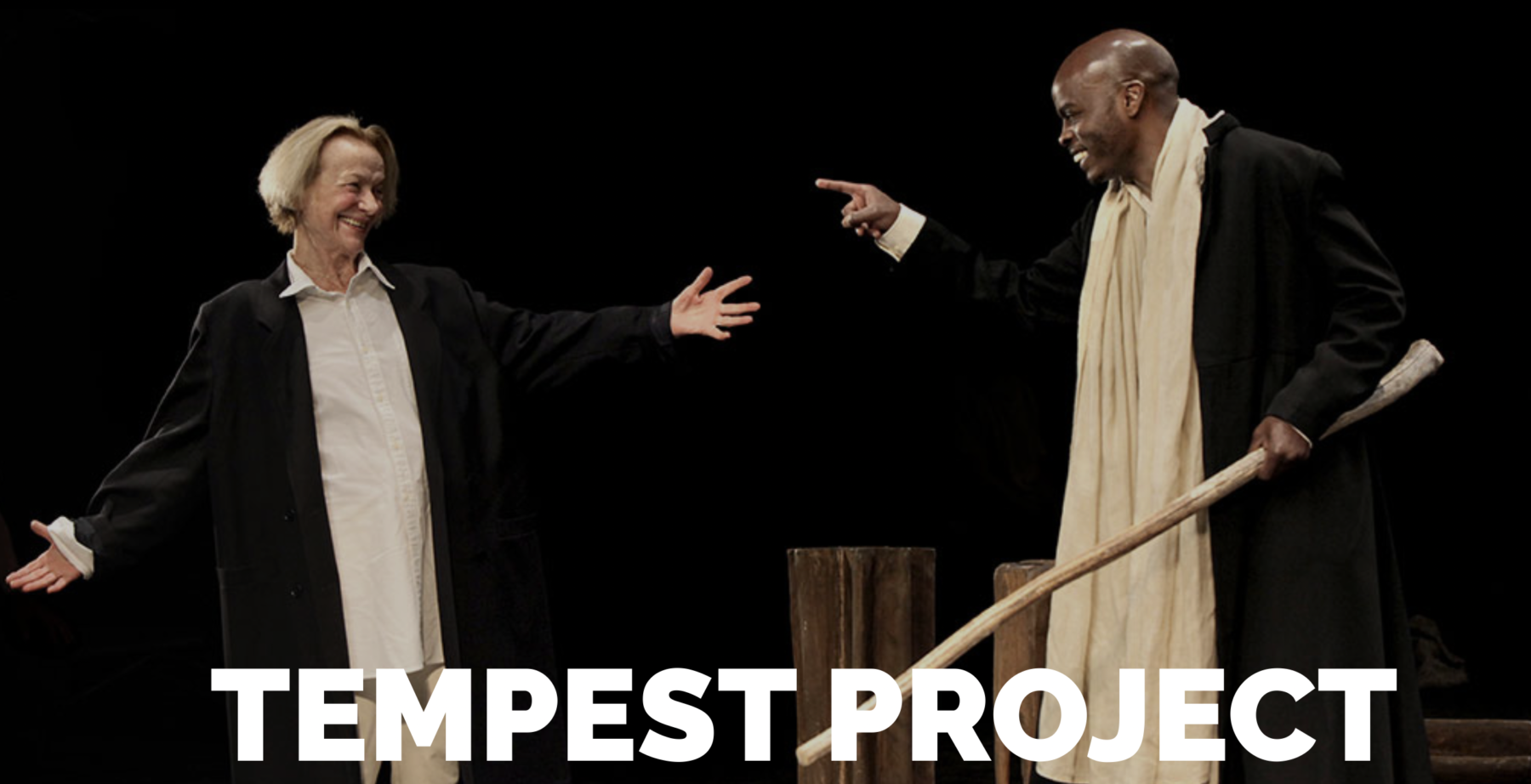
Tempest Project
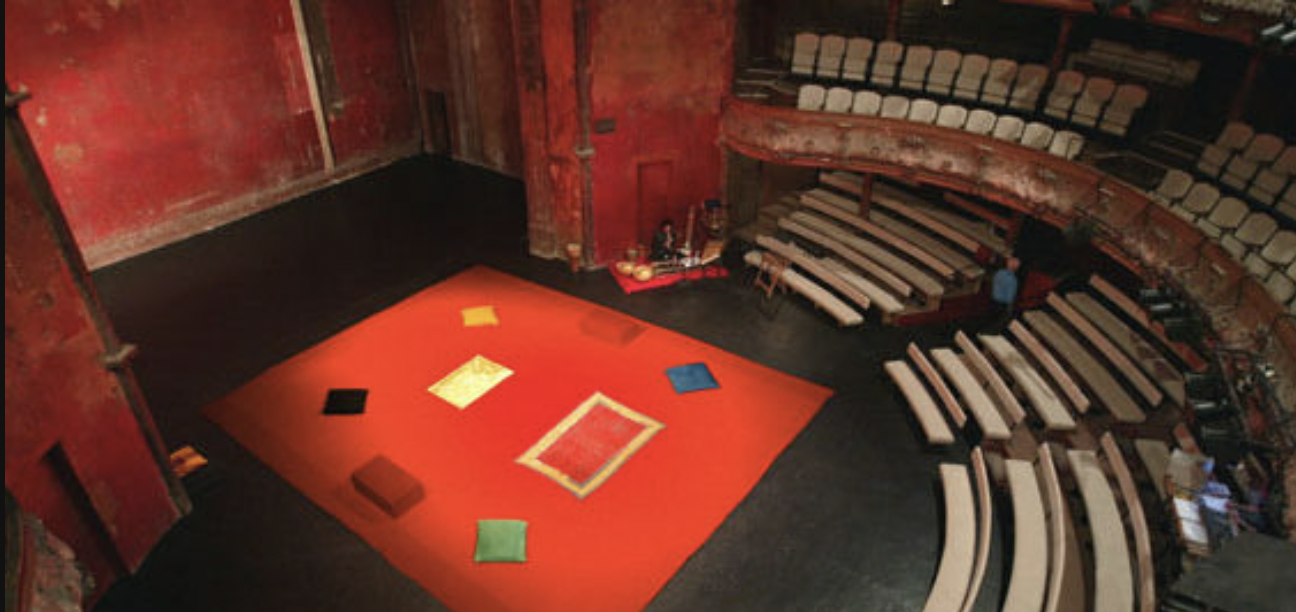
Pour revenir à cet ultime spectacle du duo Estienne / Brook, j’ai pu le découvrir dans son écrin, au théâtre dit des “Bouffes du Nord”, un lieu tout à fait à part, qui revêt une ambiance unique encore préservée (pour l’instant) de la pétrification institutionnelle…
Ce qui marque les esprits dans cet endroit, de prime abord, ce sont ses murs : d’abord ceux du couloir qui emmène le public jusqu’à la salle, dont les briques apparentes et rugueuses préparent déjà les esprits, et puis les parois de la salle de spectacle elle-même, complètement décrépites – mais quelle atmosphère !
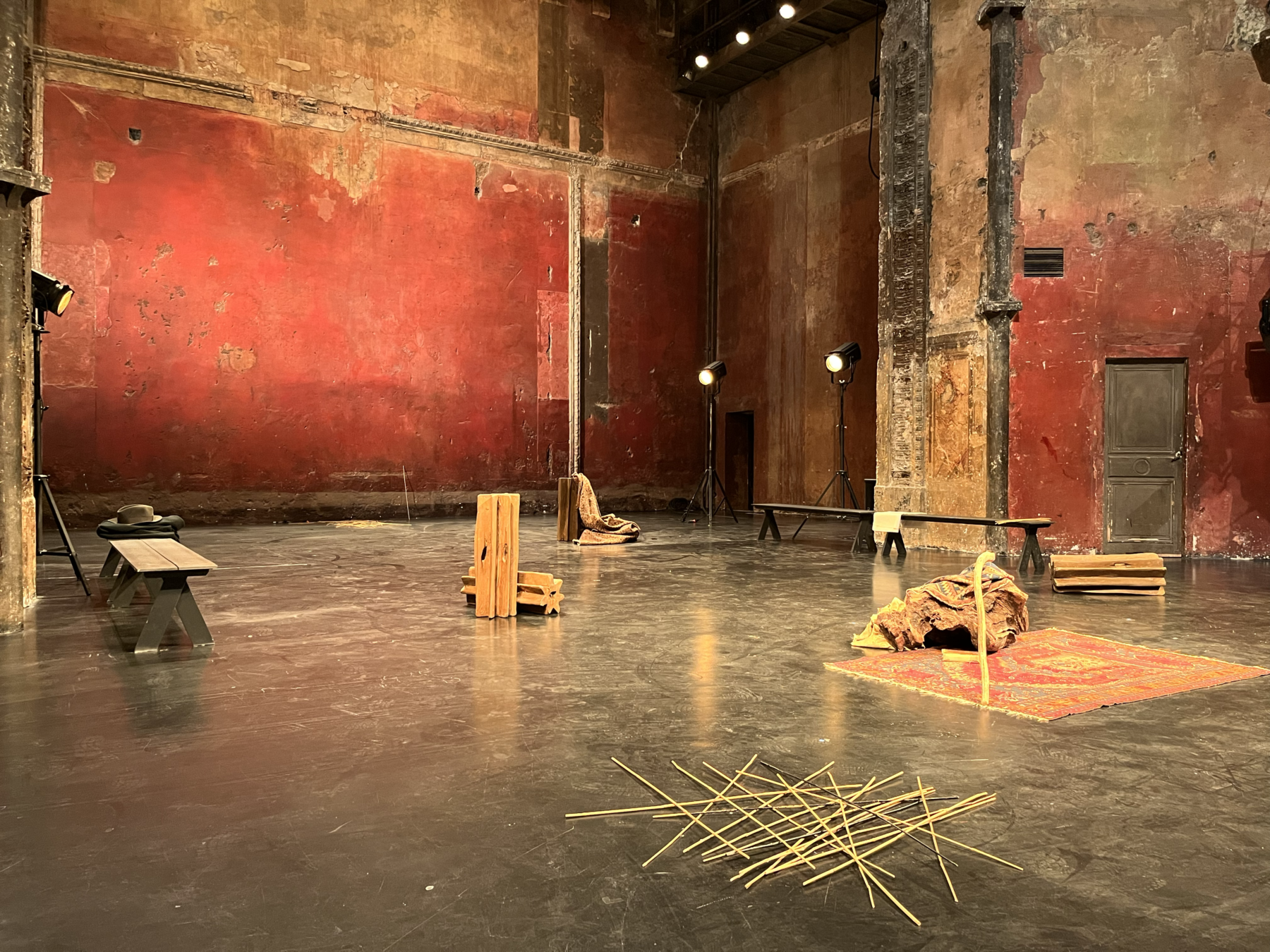
Pour ce spectacle, le plateau est presque nu – jusque là, tout est normal : c’est pratiquement leur signature.
Quelques bâtons et d’honorables bûches jonchent le sol… Tout un programme…
Pour être franc, mes espérances à l’arrivée restaient assez modestes, suite aux retours que j’avais eu deux ans auparavant – et du reste, c’est encore le meilleur moyen de ne pas être déçu.
Je me suis essentiellement appliqué à débrancher l’analyse intellectuelle, pour permettre une absorption plus organique et sensible du texte, une disponibilité à l’action, voire aux émotions.
Alors oui, c’était une très belle expérience !
Dans cette version extrêmement raccourcie de la pièce, les créateurs se sont focalisés sur quelques thèmes spécifiques, dont deux m’ont particulièrement touché :
- La question de la liberté d’abord, exprimée à travers la servitude d’Ariel et de Caliban, cet emprisonnement général sur l’ile, ou encore l’ambition de la jeunesse d’aller librement à l’Amour.
- Le pardon, ensuite. Ici, Prospero, après avoir planifié et mené son dernier acte grandiose, se dépouille lui-même de ses pouvoirs, avant d’offrir et de demander le pardon. L’idée de vengeance, qui transparait certes dans le texte complet est ainsi dépouillée et transformée. En focalisant l’attention du spectateur sur cet axe dramatique du pardon, la mise en scène structure ainsi un discours, laissant le spectateur songeur longtemps après l’issue du spectacle.
D’un point de vue stylistique, on retrouve l’attention du duo Estienne / Brook à l’essentiel : l’acteur et l’imaginaire. Une fois encore, ces simples bâtons et bûches trouvent une portée scénique démultipliée. Ils sont tantôt armes, baguettes, chemins, transcendés par l’imagination des comédiens et de celles et ceux qui les regardent et les écoutent.
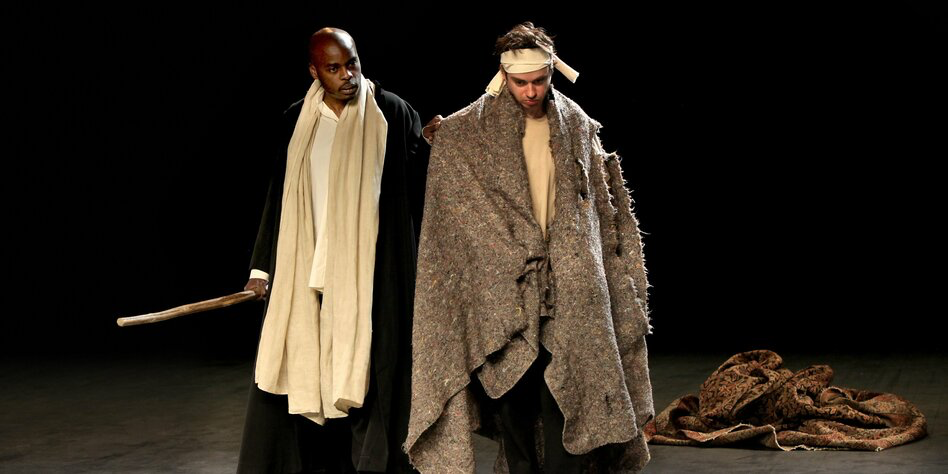
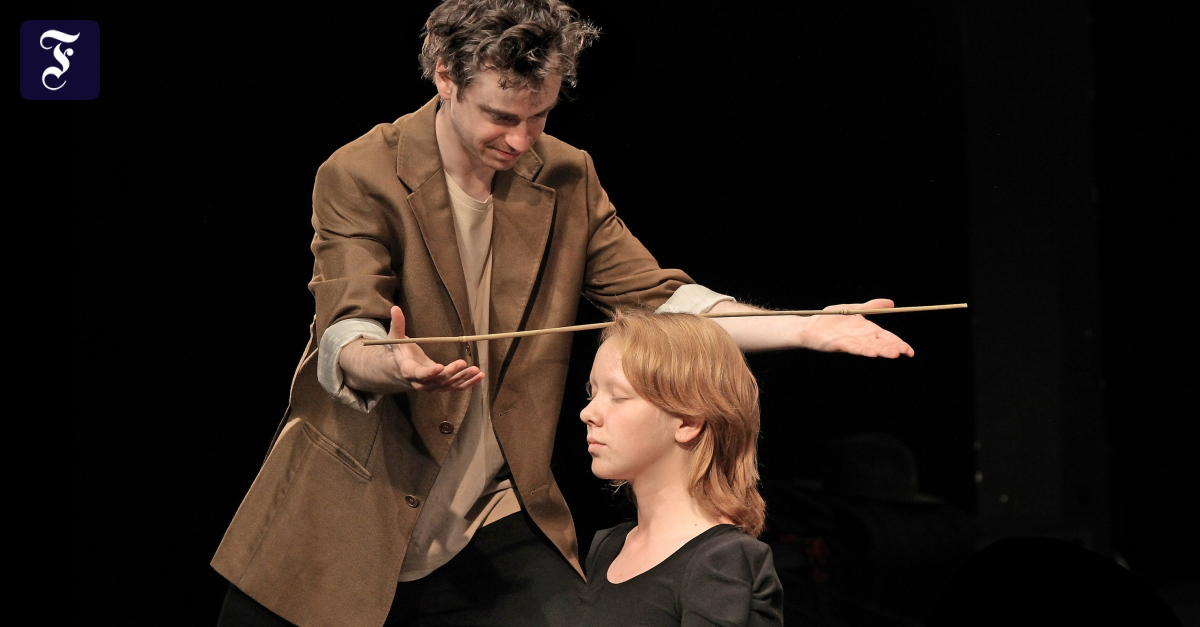
Une fois n’est pas coutume, cet art vivant – si fragile – fonctionne et nous vibrons aux côtés des comédiens.
Certaines idées scéniques sont très simples, mais font mouche, avec quelques lampes de poches qui projettent sur le mur les ombres et lumières de deux amants, lesquels s’engagent l’un à l’autre ; quand une porte se referme lentement sur une amoureuse impatiente ; ou encore lorsqu’une bande de soudards croit partir à a conquête du monde – alors, nous sommes en résonance.
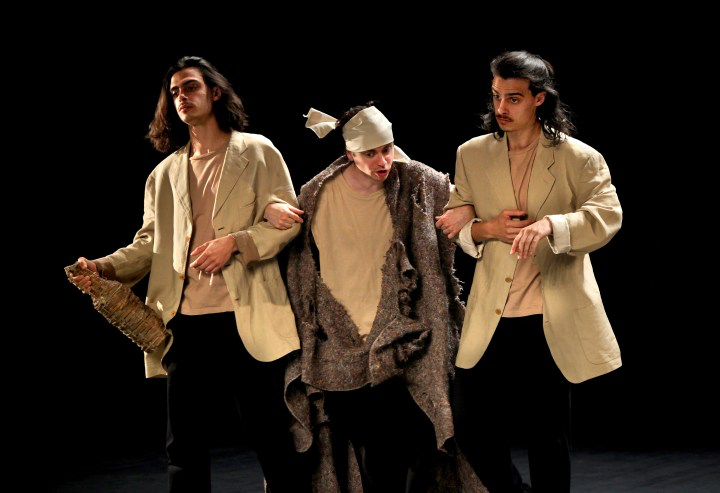
L’action et sa cristallisation scénique sont simples et subtiles.
Du reste, la distribution est très bien choisie : à la fois vibrante de personnalités multiples, comme il se doit dans l’art vivant, le spectacle conserve portant sa continuité, voire une communion de styles… tout comme la pièce elle-même, qui évolue pourtant entre des actions contrastées : souvenirs chargés d’émotions, projections d’un nouvel avenir, séquences grotesques et autres rencontres.
Dans ce style de spectacle, l’écoute y est particulièrement importante, avec notamment la relation entre une action principale (appelons la “action majeure”) et sa résonance scénique (disons son “mode mineur”, à défaut de mode “choral”) : comme chacun sait, c’est la cour qui donne sa majesté au roi, et c’est précisément ce qui se passe ici.
Je n’ai ni photo personnelle, ni vidéos du spectacle, mais avec un peu d’imagination, nous devrions être en mesure de faire vibrer tout cela dans nos esprits.
Let's figure ourselves the old Prospero, with his daughter Miranda. He rules over the island (is it a paradise or just a desert ?), with his spirit servant Ariel, and his slave Caliban, who (or which) is halfway human, halfway beast - something of a brute.
Caliban est donc là bas, au lointain, prostré sous une couche de hardes salies ; il écoute, sans rien dire, mais il est bien là, rongeant son frein… tandis que l’action principale est menée par Prospero et ses fidèles.
This is a classic, but it works - even better, it is dramatically important, as it expresses the conflicting powers at stake in the play, as well as underlying desires.
Brook / Estienne et leur équipe offrent ainsi au texte de Shakespeare une cristallisation vivante, où les femmes, les hommes et les esprits ruminent, espèrent, sont déçus parfois, chargés de colère (souvent), ou encore transformés par l’amour.
En tant que public, nous en sortons grandis et retrouvons quelque confiance en l’humanité. Un peu à la manière d’un texte de Tchekhov, cela nous rassure : il existe donc encore de l’intelligence sensible en ce monde.
1h15 de vie scénique, simple, drôle et sincère – c’est précieux !
V.
 English
  Français