I love short stories.
I must confess that, in my youth, I considered them as lesser forms of art.
Obviously, when I got acquainted to short movies writing/production, I understood better that those constrained pieces were also like concentrated versions, which gave them a very special density. It works obviously the same way, with poems and songs… and obviously to haikus
I propose you a series of posts, dealing with great examples of such forms of literature, with : H. C. Andersen, A. Daudet, N. V. Gogol, L. N. Tolstoï, A. P. Tchekhov, but also with more recent authors like Pete Fromm, A. B. Vampilov… as well as theatre plays (Pouchkine, Tchekhov, Brecht…), or short movies / animation…
Today, let’s have an introduction to a fairytale by Andersen, which is not - quite strangely - one of his most famous work : the Bottleneck.
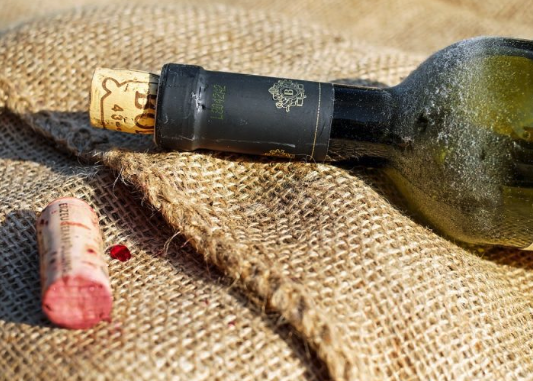
It synthesizes what I enjoy with his writings :
- funny yet deep,
- with a very specific way of telling it, almost oral,
- We follow several drama lines, intertwined,
- There is a beginning and there is an end, which shows once again the literature-like quality of the tale, as well as a great sense of form.
By the way, I believe that Andersen himself considered this short story as one of his very best.
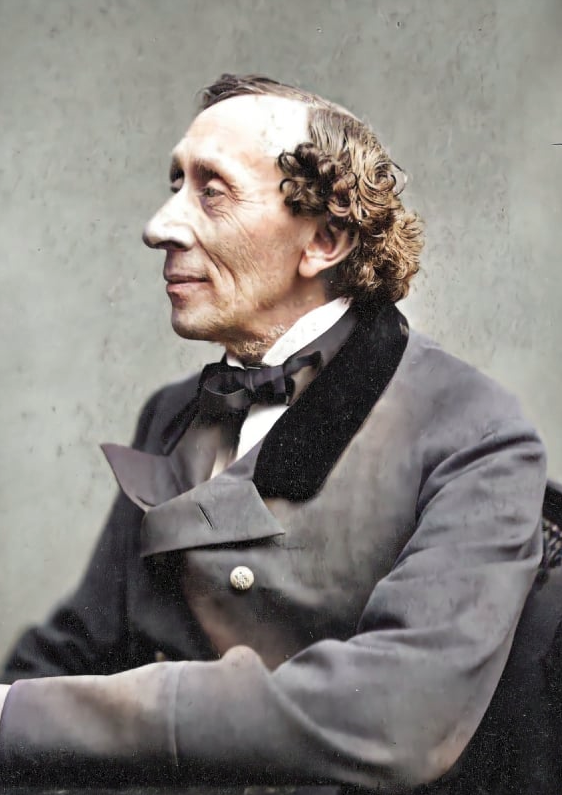
I won’t tell you the plot, as it wouldn’t serve the story (which is short enough, anyway, to give it a try : any subway or train travel should do the trick)
Let’s rather state that the personification of the bottle provides a great sense of psychological truth and good deal of humor.
In all the surrounding events, there is a sadness which the main character (the bottle itself) can't really grasp. In some way, its ego and ability to talk to itself limits its capacity to feel what the world around is really about, but as (human ;) readers, we get a broader picture - and that’s very nice to read… (it’s nice to feel intelligent, from time to time, isn’t it ?)
The story deals globally about youth and the aptitude we have at that lifetime to rejoice about the events that life provides us.
We feel the youth, very finely phrased, by witnessing both the birth (fabrication) of the bottle, its naïve perception of the world, as well as the observation and parallel story of a very young woman whom we'll meet again, later on. The nicest aspect of the writing is that we feel and guess what truly is at stake, while the bottle looks at it and merely describes what’s happening in front of its "eyes"...
Then we have all of the events of life : an initial path, shortcomings, new beginnings, expectations and hopes, disappointments, etc.
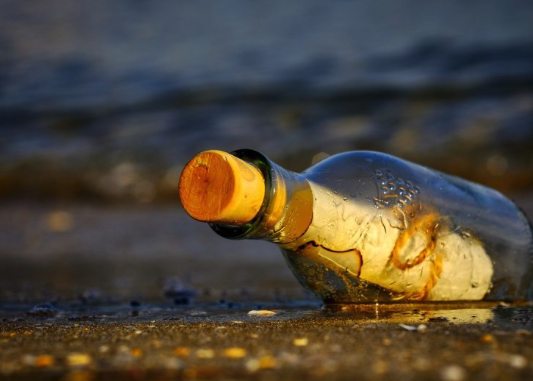
Once again, Andersen makes us feel with his script that the speed of time isn’t quite the same for an object like a bottle, compared to the life of a person. We actually all know the phenomenon, when we compare how we felt the time passing in childhood, compared to our older self…
By the way, it’s also interesting to see how a bottle in the mid 1850s would be used, over and over again. In our contemporary times of compulsory consumption, a bottle would be used once, then directly broken to pieces (maybe not in northern Europe, where it might be washed and used again).
Finally, we witness the old (and bitter) days : broken, apparently not fit for anything worthwhile, the bottle complains. Isn’t it scandalous for a great bottle like itself to be treated in such an outrageous and careless way ? Don’t everybody know what and where it has been ? Where’s the respect ? Now, it looks less than half it's ever been ! And nobody seems to care!
How true, right ?
I feel Andersen had precisely found the right way, as well as the right length, to evoke artistically something this universal.
Had he done it rather with the tale on an human being, it probably wouldn’t have been that funny - and humor is a fantastic way to get into deeper things. Had it been long like a novel, it would have been boring on the long run, and it was important to keep the reader interested, in order to read the whole thing in a row, head to toe.
I'm convinced we touch here, with this short story, to true art.
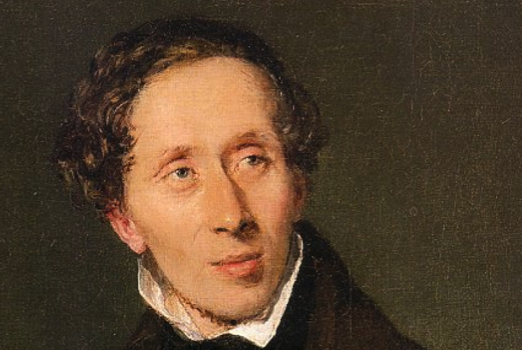
Please find the text itself :
- The original version, for those lucky ones who read danish : https://www.andersenstories.com/da/andersen_fortaellinger/flaskehalsen
- A translation in English : https://andersen.sdu.dk/vaerk/hersholt/TheBottleNeck_e.html
- A translation in French : https://touslescontes.com/biblio/conte.php?iDconte=125 (although I prefer the version translated by Regis Boyer, closer to the original, which i couldn’t find on the web)
Luckily, Andersen has given us, over the years, quite a few of such great little pieces, to name only a few :
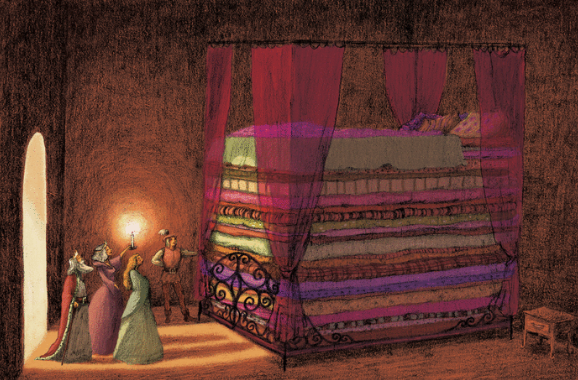
- The princess on a pea
- Five peas from a pod
- The Ugly Duckling
- The daisy
- The Emperor's New Clothes
- The piggy bank
- The Shepherdess and the Chimney Sweep
Did you like it / them ?
V.
 English
  Français
One response to “Impressions : shorts stories - The Bottleneck, by H.C. Andersen”
[…] vous le savez (peut-être), j’apprécie les nouvelles en général : Tchekhov, Zweig, Andersen, Tolstoï (ici ou là), Daudet, Erich Maria Remarque, ou encore pour les contemporains Pete Fromm. […]