As I was finishing Marcel Pagnol's childhood memoirs — first-rate literature, it should be said — which my friend C. had been kind enough to lend me, a book caught my eye on his shelf: "Le Premier Amour" ("First Love").
I naively assumed it was the final volume in that series, the one devoted to childhood and adolescent romance (actually titled "Le Temps des Amours").
Imagine my surprise, once home, to discover it was in fact an unproduced screenplay, set, would you believe it, in prehistoric times!
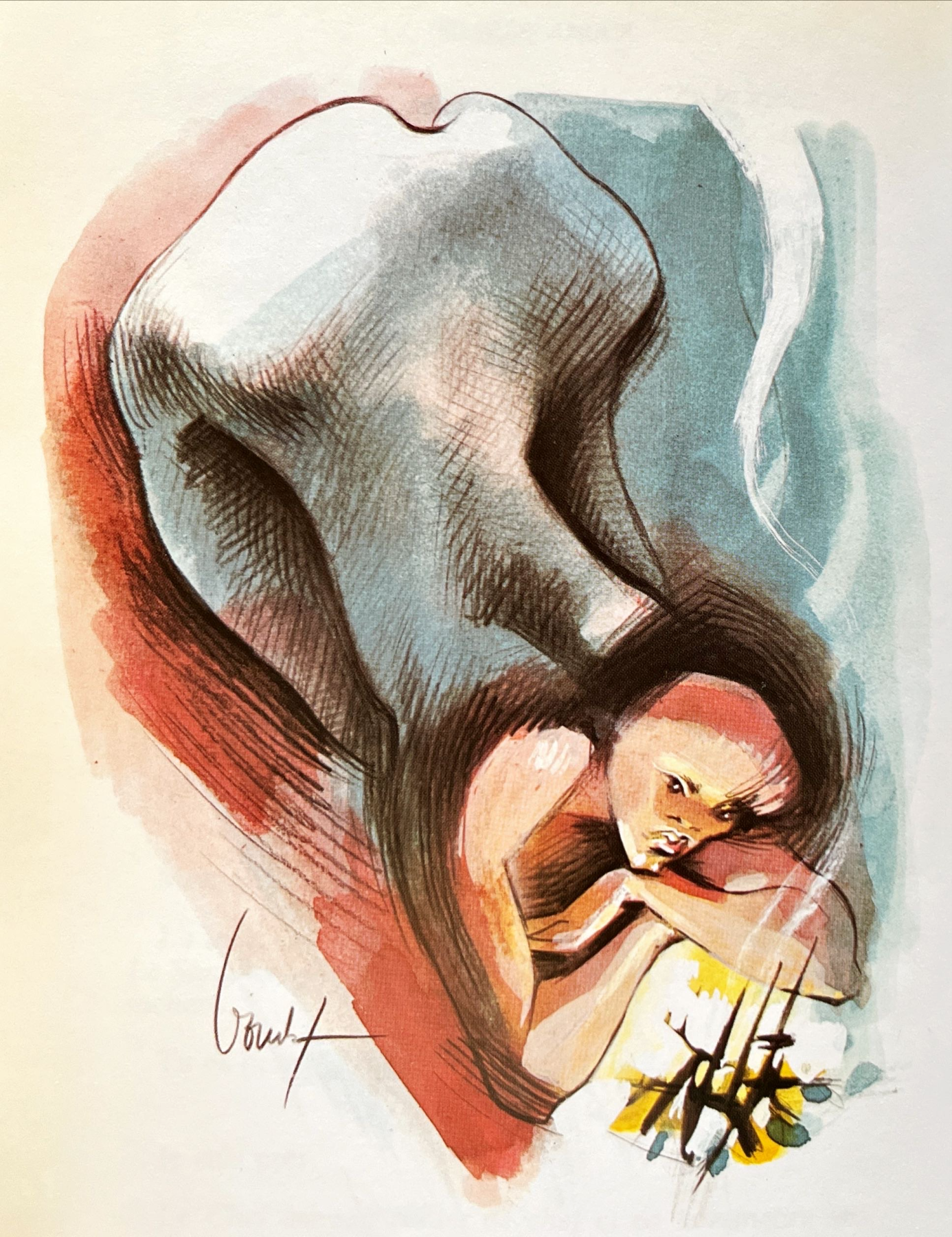
Beyond the opening stage directions and notes on intent, it reads essentially as a play — and a remarkably successful one at that.
Which is why it's the subject of this post.
First Love
What makes a good play? (or a good script)
A material capable of awakening the imagination, stirring enthusiasm, and moving us emotionally.
This piece does all three — and yet it stands in complete stylistic discontinuity with Pagnol's better-known works, such as the Marseilles Trilogy (Marius / Fanny / César) or Topaze. The shift is apparent both in language and vocabulary (which is quite logicial, considering the prehistoric set), and also because this is, for once, not a comedy.
It is, in short, an artistic oddity.
Let's picture a tribe fleeing desperately from a wildfire. They take refuge on a bare rocky outcrop overlooking the valley, and count their members — despite the catastrophe, this in just one crisis among many.
Anyway : life must go on. The very next day, since spring has arrived, the young women of the tribe must go out to "find babies" — the most precious resource for the tribe. They scatter through the surrounding land, soon followed by the clan's men. There is no choosing here; one simply finds one another, by chance.
But one of the men isn't willing to play along this game. Moved by an strange feeling, he follows one of the women in particular — the rebel of the group — and prevents another man from performing "his duty". Though this other man is a friend of his, he goes so far as to raise his weapon against him to keep him from reaching that very girl.
What follows is a kind of trial, in which our man is judged for the most serious of crimes one could have done : raising a weapon against a fellow tribe member is tantamount to an attack on the tribe itself.
He must explain his act — which he doesn't deny at all — without being able to fully account for it. What grips him, of course, is Love. Not only is the tribe unable to grasp this, but worse still, the elder explains the danger it represents: to fix one's attention on a single member of the collective would put the cohesion of the whole group at risk.
The great artistic strength of this scene lies in its contrasts: the conversation unfolds with open hearts and genuine tenderness — and yet the stakes are deadly serious. The young man wants to understand why his transgression is a mortal one, and the old elder duly explains it to him.
What is at stake here is nothing less than the drives of life and death. Rather than an immediate execution, the guilty man is banished — condemned to live outside the tribe, which is to say, condemned to die before long. And so he departs, exposed to every danger nature has to offer at the time.
Moved by a strange impulse, the young woman suddenly decides to go with him. The two of them might form their own small tribe — but how are they to survive, alone, without a cave, without weapons, with nothing at all, really, naked in the wilderness?
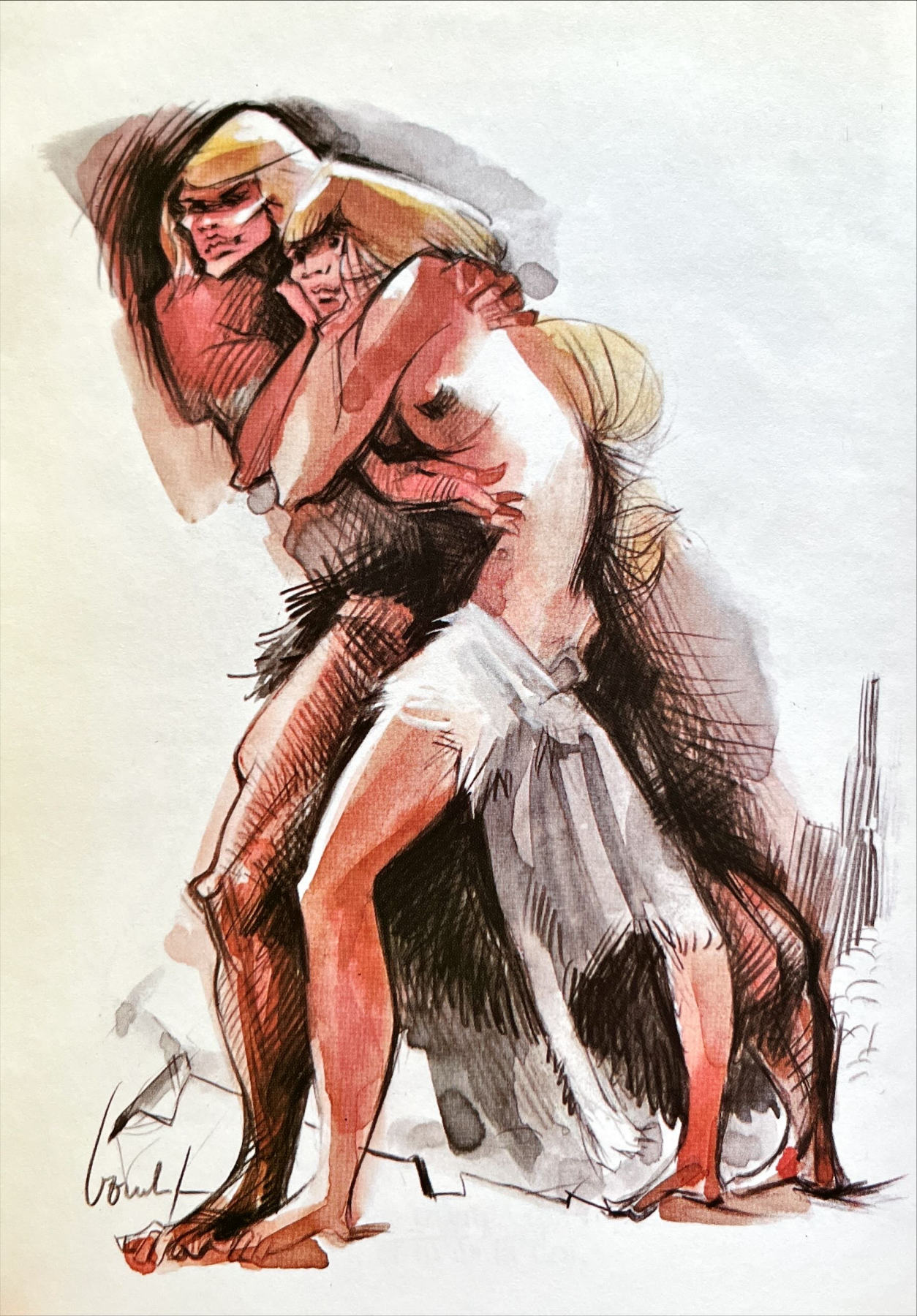
I'll leave you to discover what unfolds, but beyond this discovery of Love, there is another: Fire !
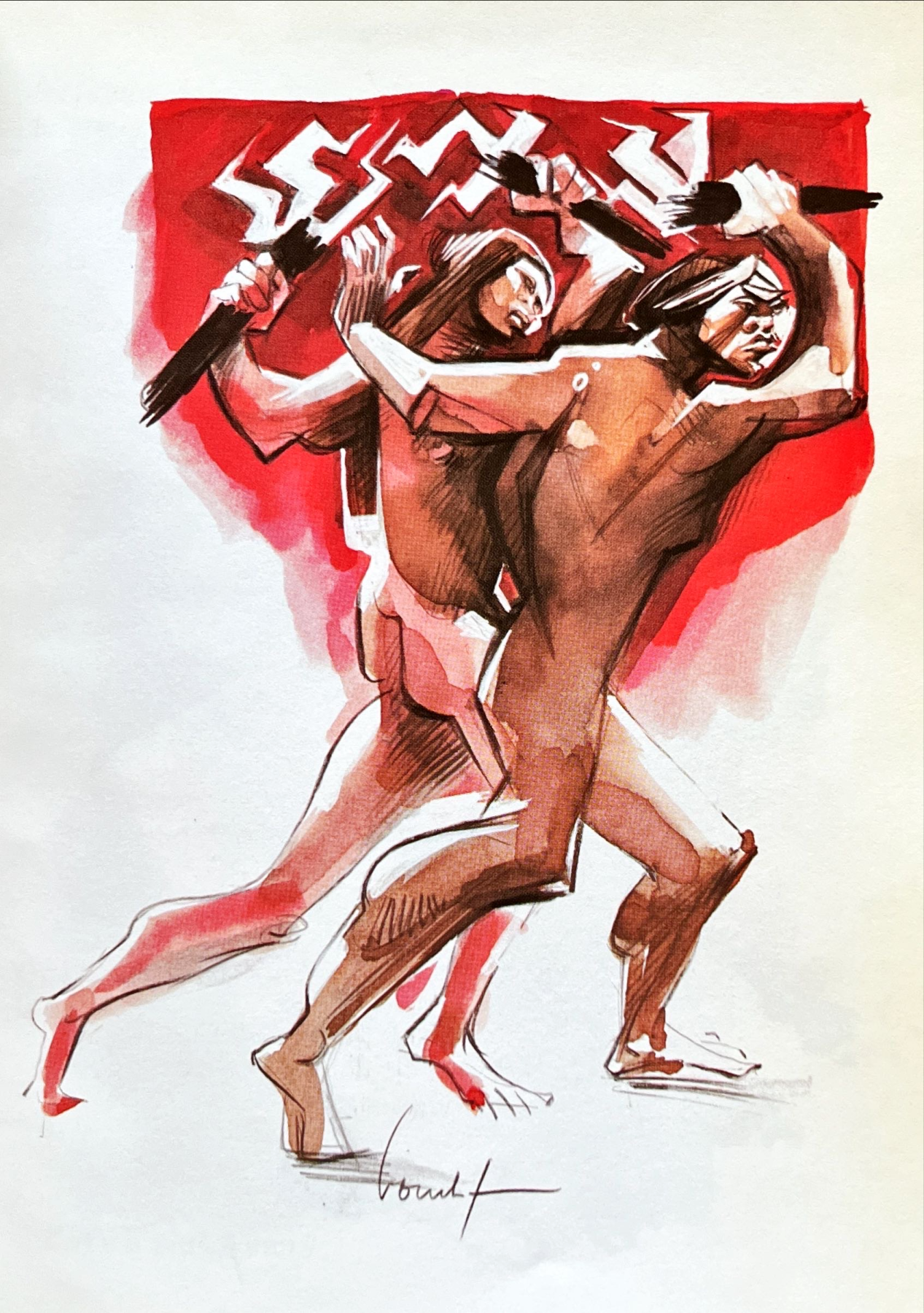
Beyond wild animals, cold, hunger, and thirst, there is no greater enemy than Fire — an almost mystical force that seems to devour everything indiscriminately. When it appears, born of lightning and a raging blaze, there is usually only one response: to run as far as possible from it !
And yet, the woman believes it can be tamed — that it might even help them, and eventually save from cold the child they will soon bring into the world. The man refuses to believe her, at first, and then lets himself be persuaded.
More dead than alive, he agrees to tempt fate.
I'll say no more about the plot.
As a dramatist of rare caliber, Pagnol makes us vibrate in sympathy with this unlikely couple. The psychology appears simple — which is to say, plausible — and it hits exactly where it should.
These roles would be extraordinary both to play as an actor and to experience as an audience.
Furthermore, Pagnol raises fundamental questions whose resonance is still pending today, including:
- The tension between the collective and the individual: Can one nourish the other? Are they genuinely at odds? How do we reconcile the two in a world facing a potentially existential crisis?
- Established tradition versus the willingness to take a risk: In a world that follows the old rule of never changing a winning team (even when it's losing), and where "we've always done it this way" — then, what is the place of upheaval? Is it really reasonable to change nothing? Or conversely, to overturn everything?
- The place of intuition and feeling in a rule-bound society: This question resonates particularly in the modern Western world, materialistic and normative as it is. If premonitions were once considered magical, and dreams prophetic visions, intuition today seems to have no room left. And yet — in the arts, in creative work, and even in engineering actually, intuition and lateral thinking have every right to exist. (Without letting oneself be blinded or fooled, of course, by mistaking dreams for reality.)
- And naturally, the question of the relationship with the other, essential when it comes to Love — a mystery still intact — but also with those closest to us, with friends, with the social group. Orbiting this play are questions of sacrifice, of self-giving, and of the infinite value of life.
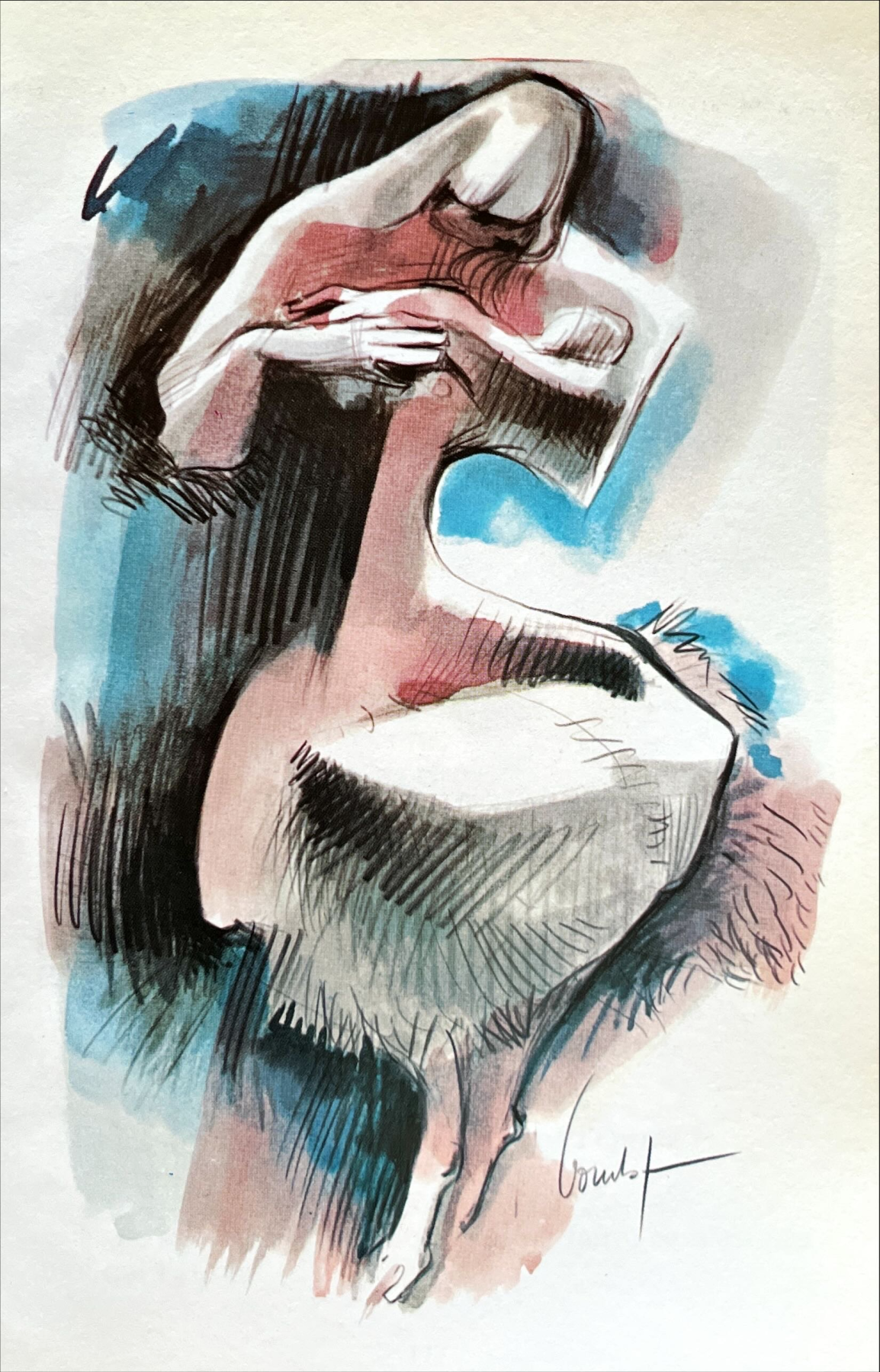
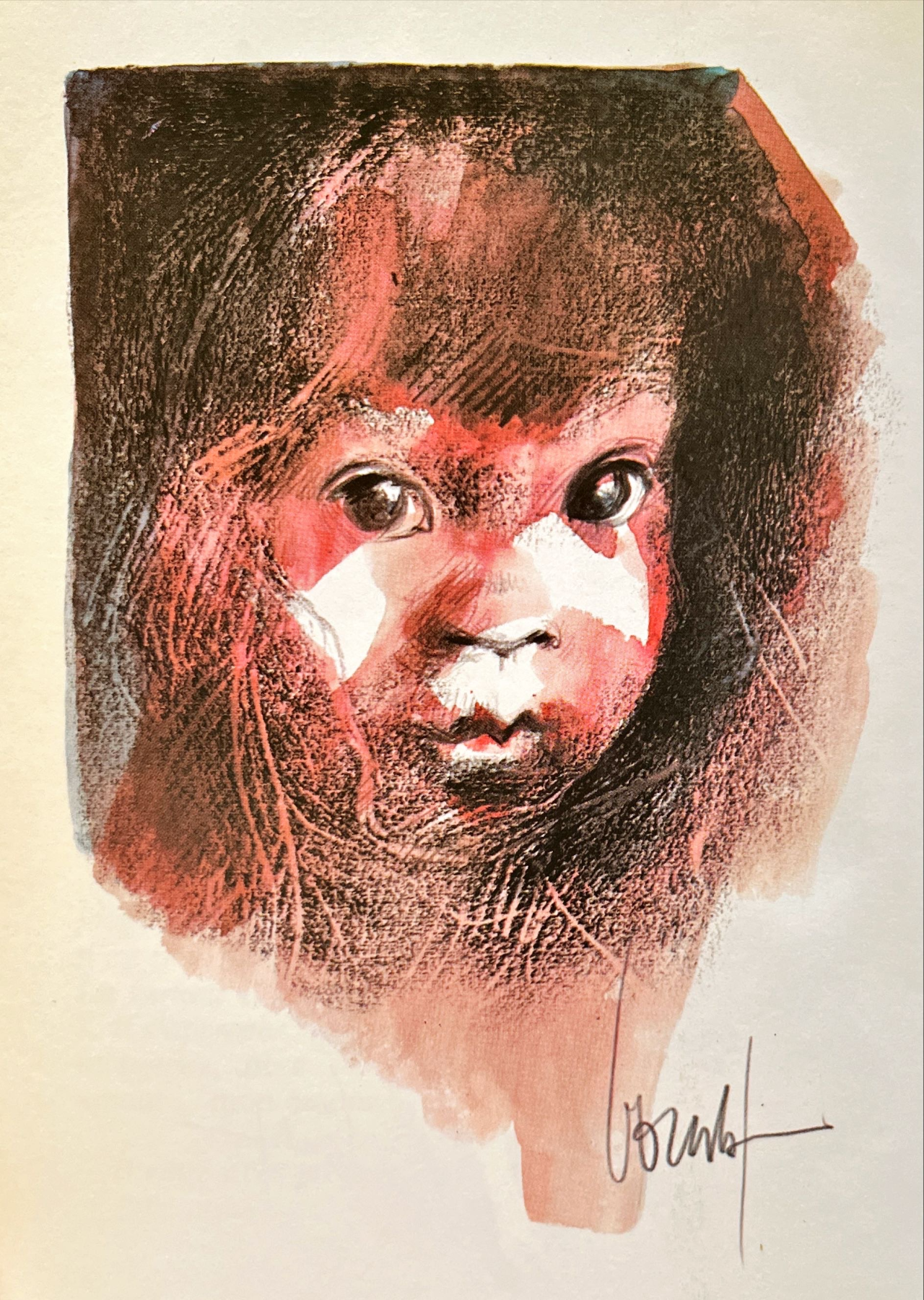
In short, this is an excellent play — one that suffers only at the very end from a slightly dated approach, in its treatment of progress and its sometimes tragic consequences. That "progressive" concern still makes sense, especially at a time when wars are both more technologically advanced and more brutal, but the way it is expressed here feels a little old-fashioned. A modern staging would have to find a solution for it.
Anyway, I recommend it wholeheartedly — the reading itself is a pleasure.
There is, of course, a direct connection to the well-known novel Quest for Fire and the film of the same name — which will be the subject of a future post.
The Graphic Novel Adaptation
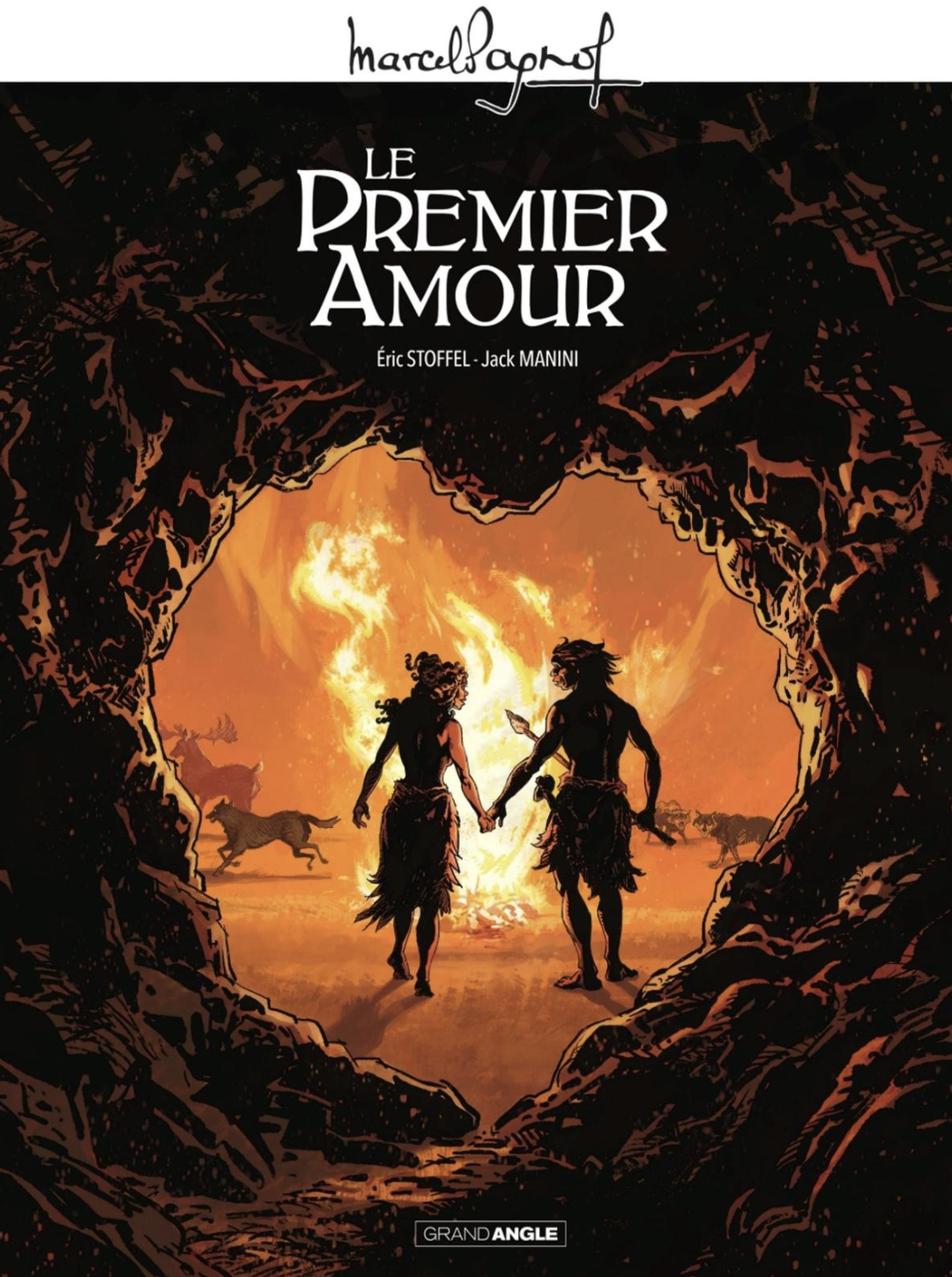
Given the quality of the screenplay and the power of its imagery, it was only natural that someone would adapt it into a graphic novel.
That has been actually done — and I mention it here because it illustrates an unexpected truth: you can start with excellent raw material and still fumble the conversion spectacularly.
Here are a few pages, in the beginning of this adaptation, to give you a sense of it (they have their merits) :
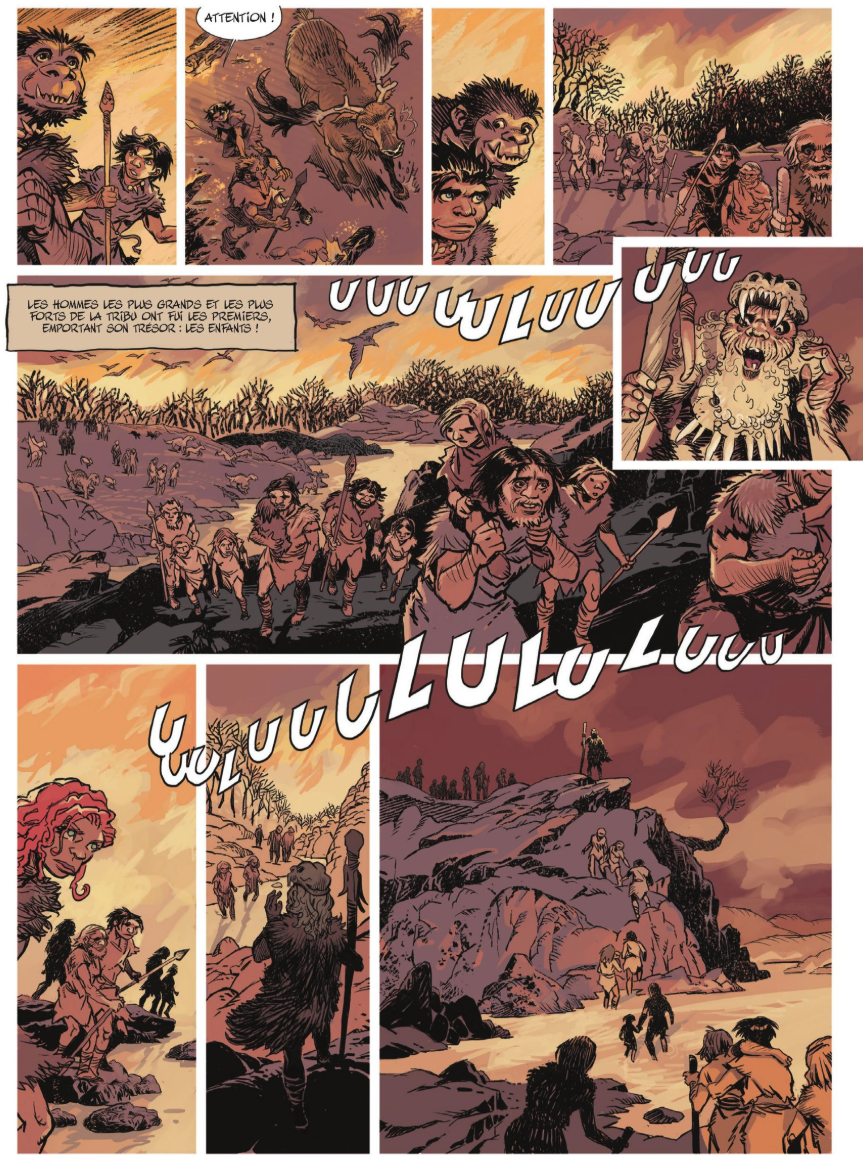
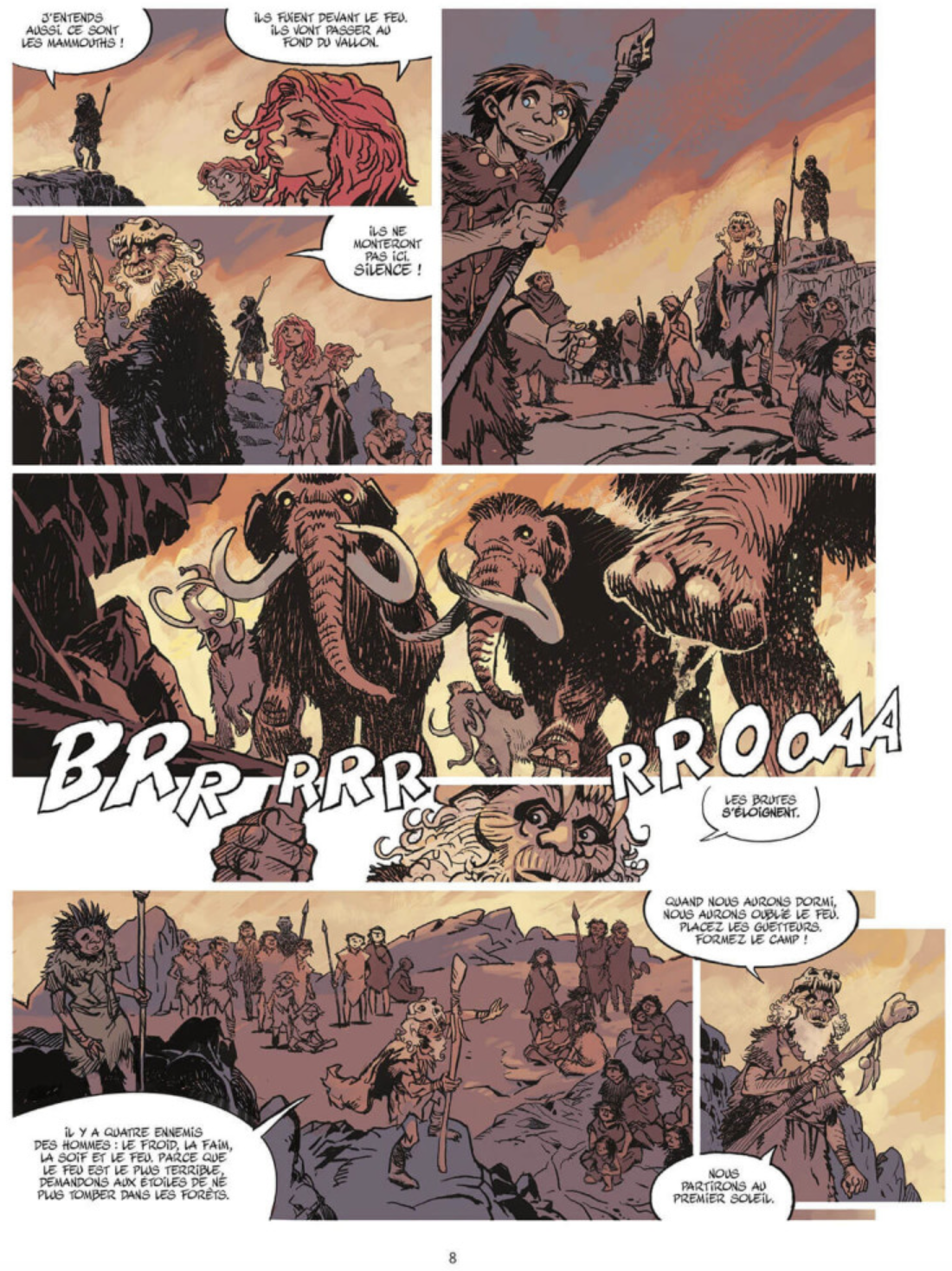
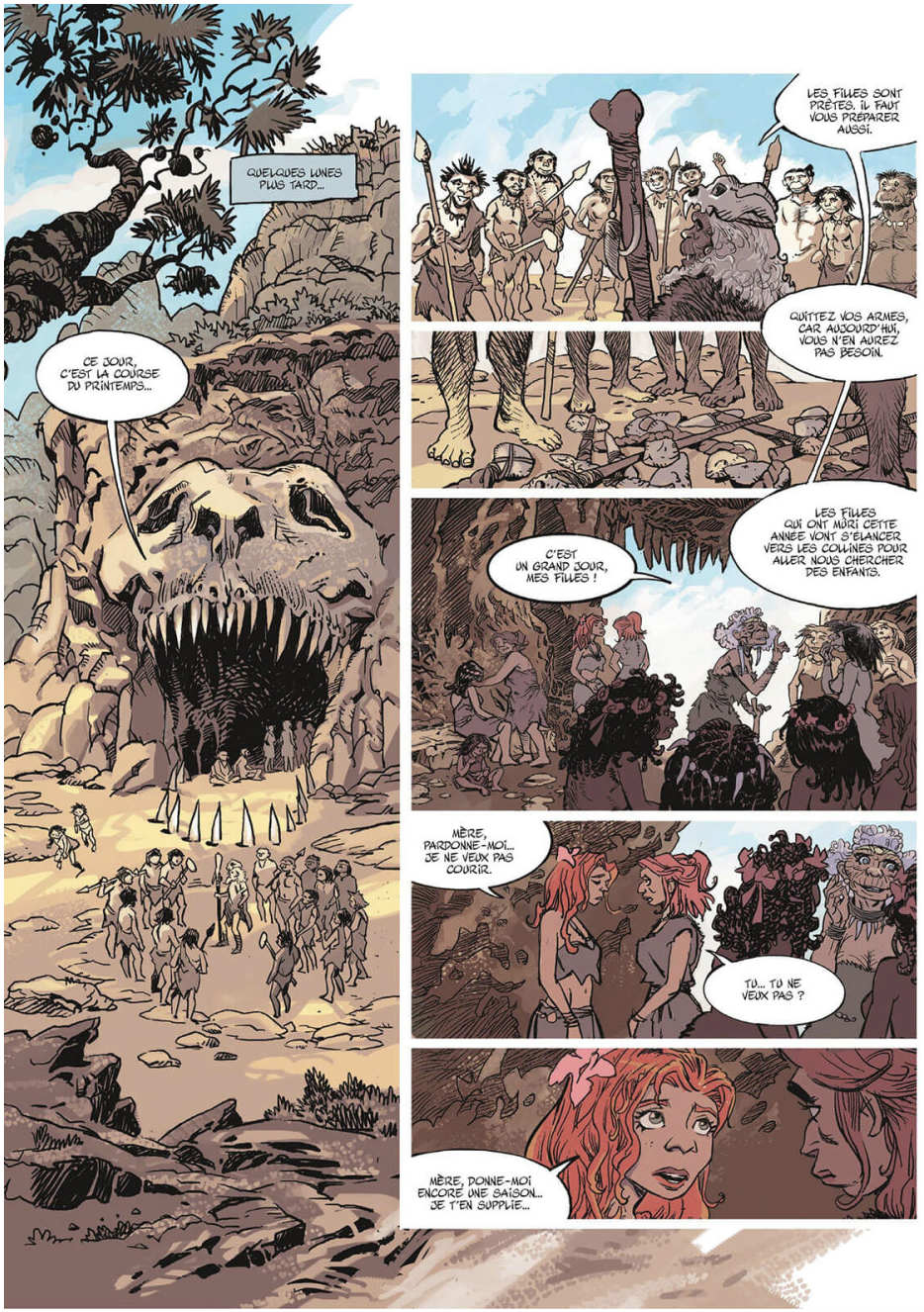
Eric STOFFEL – Jacques MANINI
It exists - fine… But for the rest, I was deeply disappointed.
It's less a question of the visual style — which is fairly distinctive, but why not, after all ? — than of the scriptwriting choices
The adaptation does resemble the source material, as it retells the same events, but it preserves neither the poetry nor any emotion. What a shame !
Telling a story is not simply a matter of stringing events and action together. It is, above all, about awakening the imagination, stirring enthusiasm, making the reader want to dive in this world.
Here, we get the bare minimum. The screenplay feels thinly adapted for its new medium, which suggests a certain opportunism at work: the writer likely just kept doing"as usual", going on along previous adaptations from Pagnol's other works.
What a poverty of imagination ! What a complete absence of risk, and lack of any Art !
All right, It takes all types to make the world go round, and perhaps this might appeal to those who haven't read the original — or maybe, who knows, that will inspire them to seek it out... But I doubt it.
In any case, that was a double artistic lesson — from the original material and from this failed adaptation — and that, at least, is priceless !
 English
  Français